Quick Pickled Radish Recipe That Stays Crunchy
Crunchy pickles sound simple until you make them once and the radishes turn soft, too sharp, or oddly watery. A good pickled radish recipe fixes that with two things: a brine that tastes clean and balanced, plus a method that keeps the radish texture snappy.

This guide is built around one reliable pickled radish recipe you can repeat every week. It covers quick pickled radish timing, an easy pickled radish option that skips the stove, sweet and sour radish balance, Korean pickled radish cubes, pickled radish strips for bowls and sandwiches, and a clear comparison of vinegar pickled radish versus fermented radish styles like radish kimchi. You will end with a jar that tastes bright, stays crunchy, and actually gets used up.
What “crunchy” means in a pickled radish recipe
Crunch is not just about the radish being raw. Crunch is the feeling you get when the radish still has structure after the brine goes in. A crunchy pickled radish has a clean snap, a little bite, and a refreshing finish. The brine should taste tangy pickled radish sharp, then soften into a light sweet note, without turning syrupy.
A pickled radish recipe stays crunchy when three conditions line up.
Freshness of the radish
Radishes lose water over time. A radish that already feels spongy will never become a crunchy pickled radish, no matter how perfect the pickling brine for radish is.
Slice thickness and cut style
Thin chips pickle fast and taste great quickly, yet they soften sooner. Pickled radish strips hold crunch longer than paper thin slices. Cubes hold their texture the longest.
Brine temperature and contact time
Heat can “cook” radish texture. Warm brine is fine when handled carefully, yet hot brine poured straight over thin slices can dull the snap.
The core pickled radish recipe you can use every time
This base pickled radish recipe is a refrigerator method. It is not a shelf stable canning method. Keep it cold, keep it clean, keep the radishes under the brine, and you will get consistent results.
The ingredient logic behind this pickled radish recipe
A good pickled radish recipe tastes like a finished condiment, not just vinegar on vegetables.
Vinegar gives the tang.
Water keeps the vinegar from tasting harsh.
Salt sharpens flavor and helps texture.
Sugar rounds the edges for a sweet and sour radish style.
Seasoning makes it feel “restaurant level” with almost no extra effort.
Base pickling brine for radish (one medium jar)
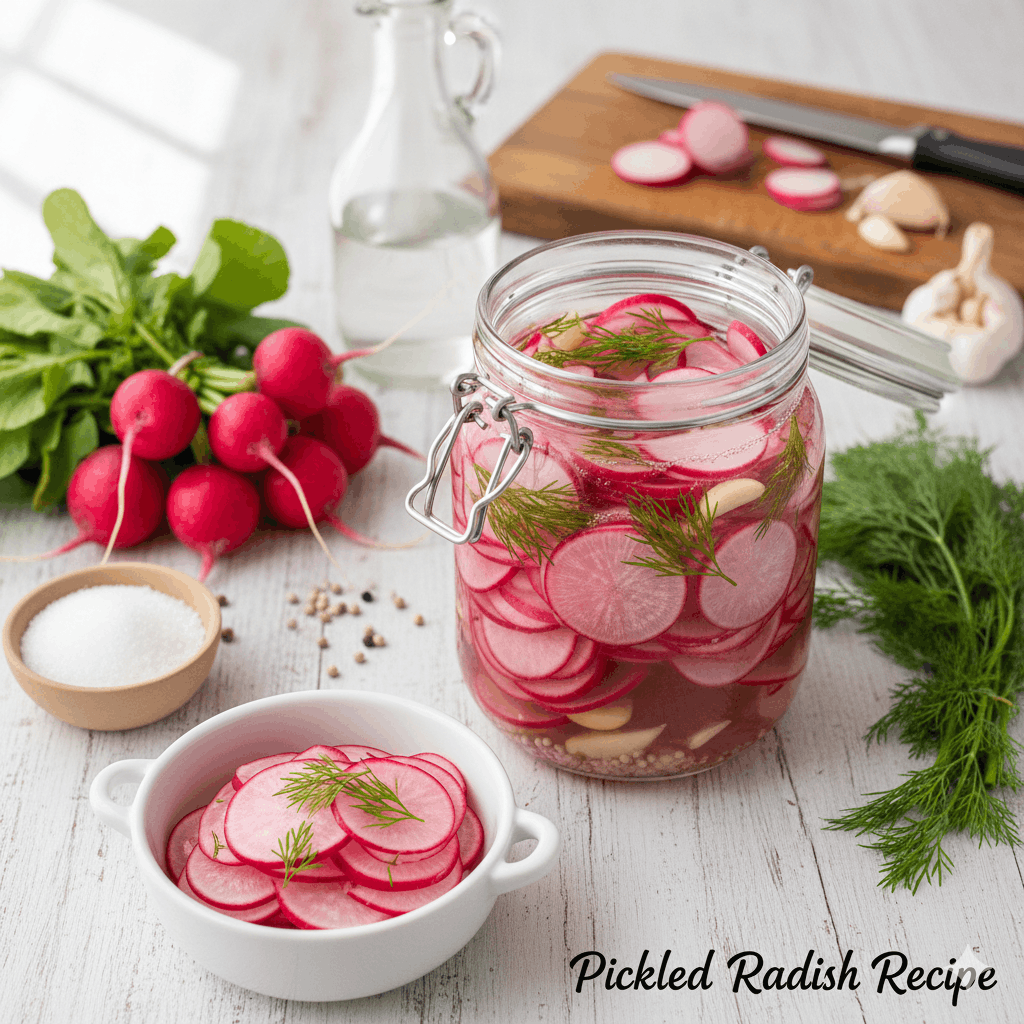
This pickling brine for radish fits a standard radish pickle jar in the 500–700 ml range.
- Vinegar: 1/2 cup
- Water: 1/2 cup
- Fine salt: 2 teaspoons
- Sugar: 1 to 2 tablespoons
This brine hits a clean vinegar pickled radish taste. Use the lower sugar amount for a tangy pickled radish. Use the higher amount for sweet and sour radish.
Pickled radish seasoning options
Seasoning is where a homemade pickled radish starts feeling personal. Use one “base” plus one “accent” and stop there. Too many add ins make the jar taste muddled.
Base choices
- Smashed garlic clove
- Whole black peppercorns
- Mustard seeds
Accent choices
- Thin slices of fresh chili for spicy pickled radish
- A few slices of ginger for a bright bite
- Dill sprig for a classic pickled radish side dish vibe
- Sesame seeds for a Korean leaning finish
Keep the seasoning light. The star remains the radish.
Picking radishes that stay crunchy after pickling
The shopping step matters more than people think. If your goal is crunchy pickled radish, start here.
What to look for
Choose radishes that feel heavy for their size, with firm skin and no soft spots. Leaves should look fresh, not slimy. Small to medium radishes usually pickle more evenly than oversized ones.
What to avoid
Avoid radishes with wrinkled skin, hollow centers, or a mushy feel near the root. Those radishes can taste strong and still go soft in the jar.
Red radish vs daikon vs Korean radish
A classic pickled radish recipe uses red radishes and gives a pink brine over time. Daikon and Korean radish stay white, taste milder, and work well in Korean pickled radish styles. Daikon is a common base for a pickled daikon recipe, especially in matchsticks.
Prep that protects crunch
A pickled radish recipe gets easier when you use a repeatable prep routine.
Wash, then dry well
Water clinging to the radish can dilute brine flavor. Pat dry after washing.
Choose your cut style
Cut style changes eating style and crunch life.
Pickled radish strips
Pickled radish strips are ideal for rice bowls, wraps, burgers, and tacos. They stay crisp longer than thin rounds.
Thin rounds
Thin rounds are perfect when you want quick pickled radish that tastes ready fast. They soften sooner, so plan to eat them earlier.
Cubes
Cubes give the most reliable crunchy pickled radish texture and match the feel of Korean pickled radish served with fried chicken.
Two methods: cold brine quick pickled radish, or warm brine quick pickled radish
Both methods can produce an easy pickled radish result. The difference is speed and texture.
Method A: cold brine (the easiest pickled radish path)
Cold brine keeps texture crisp and is the best fit when the goal is “stays crunchy.”
- Mix vinegar, water, salt, sugar until dissolved.
- Pack radishes into a radish pickle jar.
- Add your pickled radish seasoning.
- Pour brine over the radishes.
- Chill.
Cold brine quick pickled radish tastes lightly pickled in about 30–60 minutes, then develops deeper flavor overnight.
Method B: warm brine (faster flavor, still crunchy with care)
Warm brine dissolves salt and sugar instantly and can speed up flavor.
- Warm the brine just until salt and sugar dissolve.
- Let it cool for a few minutes. Aim for warm, not hot.
- Pour over radishes, then chill.
Warm brine is better for cubes and thicker cuts. Thin slices are more sensitive to heat.
Step by step: the main pickled radish recipe that stays crunchy
Ingredients
- 2 bunches radishes, trimmed
- 1/2 cup vinegar
- 1/2 cup water
- 2 teaspoons fine salt
- 1 to 2 tablespoons sugar
- Pickled radish seasoning of choice
Equipment
- 1 clean radish pickle jar with lid
- Knife and board, or a mandoline
- Measuring cup and spoon
Directions
Step one — cut and pack
Slice radishes into your preferred shape. Pack them into the jar. Pack firmly, yet do not crush them. Add seasoning.
Step two — mix the pickling brine for radish
Stir vinegar, water, salt, sugar until dissolved. Taste the brine. It should taste a little intense. In the jar, it mellows.
Step three — pour and submerge
Pour brine into the jar until the radishes are fully covered. If radishes float, press down gently with a clean spoon.
Step four — chill and test
Chill at least 30 minutes for quick pickled radish. Taste. If you want deeper flavor, chill longer.
Step five — final adjustment
If the jar tastes too sharp, add a tiny bit more sugar dissolved in a spoon of brine. If it tastes flat, add a pinch of salt.
This pickled radish recipe is forgiving, yet small adjustments work best.
Timing: when this pickled radish recipe tastes best
Timing depends on cut.
Thin slices
A quick pickled radish made with thin slices tastes bright after 1 hour, then becomes more rounded overnight. The texture is best in the first week.
Strips
Pickled radish strips take a little longer to absorb flavor, yet hold crunch longer. Overnight is a great target.
Cubes
Cubes shine on day two and day three. They stay crunchy longer than slices.
Sweet and sour radish balance without making it cloying
Sweet and sour radish should taste clean. The sugar should not scream “sweet.” It should soften the vinegar edge and make the radish more snackable.
How to tune sweetness
- For a tangy pickled radish, use 1 tablespoon sugar.
- For classic sweet and sour radish, use 2 tablespoons sugar.
- For very mild sweetness, use 2 teaspoons sugar.
A homemade pickled radish can taste sweeter after resting. Taste again the next day before adding more sugar.
Better sweetness options
White sugar is neutral. Honey adds aroma. Maple adds a deeper note. Any of them can work in a pickled radish recipe, yet the goal stays the same: balance.
Spicy pickled radish that still tastes fresh
Spicy pickled radish should punch, then disappear. If the heat lingers in a harsh way, the jar can feel heavy.
Spicy options that work well
- Fresh chili slices for bright heat
- Chili flakes for steady background heat
- A spoon of gochugaru for a Korean leaning profile
Keep it from turning bitter
Use a small amount at first. Heat blooms as the jar rests.
Korean pickled radish: the classic “chicken mu” style
Korean pickled radish is often served as cold cubes next to crispy chicken. The taste lands in the sweet and sour radish zone, with a gentle salt line.
Cut and jar style
Use cubes. They keep the signature crunch and hold brine well.
Brine notes for Korean pickled radish
A Korean pickled radish brine usually tastes slightly sweeter than a purely tangy pickled radish. Use the higher sugar range. Keep seasoning simple. Garlic is optional. Peppercorns can work. Chili is usually not the main note in chicken mu.
How to serve as a pickled radish side dish
Serve cold in a small bowl with a little brine. It cuts through rich food and resets the palate.
Traditional pickled radish, without overcomplicating it
Traditional pickled radish can mean different things across kitchens, yet the common thread is simplicity. A traditional pickled radish jar tastes like radish, vinegar, salt, and a gentle sweet note. You do not need a long spice list to make it feel “right.”
If you want a traditional pickled radish feel, skip bold spices and use garlic plus peppercorns, or just garlic alone. Keep sugar moderate. Let the radish do its job.
Pickled daikon recipe swap guide
A pickled daikon recipe fits the same framework, yet daikon behaves differently from red radish.
Texture and taste differences
Daikon is less peppery and more watery. It can still be crunchy pickled radish style crunchy, yet it benefits from a slightly thicker cut.
Best cut for daikon
Matchsticks are the classic pickled daikon recipe shape. They grab brine fast and work well in sandwiches and bowls.
Optional pre salt step
Daikon releases water. A short salt rest can help.
- Toss daikon matchsticks with a small pinch of salt.
- Rest 15 minutes.
- Rinse quickly, then pat dry.
- Move on with the pickled radish recipe brine.
This step is not mandatory, yet it can improve crunch.
Radish salad and pickles: two sides of the same craving
A radish salad is fresh, crisp, and sharp. Pickles hit a similar craving with a different finish. You can combine them.
A simple radish salad that pairs with pickles
Slice fresh radish thin. Add cucumber, scallions, lemon, salt, and a small drizzle of olive oil. Top with a handful of pickled radish strips from your jar. The salad stays bright, and the pickles add tang.
A Korean inspired radish salad direction
If you like the taste of Korean radish salad, you may enjoy a spicy radish salad profile with chili, garlic, sesame, and a splash of vinegar. It tastes close to kimchi flavors without being fermented radish.
Fermented radish vs vinegar pickled radish: what to choose
People mix these up. They are not the same style.
Vinegar pickled radish
Vinegar pickled radish is what most people mean by quick pickled radish. Vinegar provides the sour note right away. The jar is kept refrigerated. Flavor builds over hours to days.
Fermented radish
Fermented radish develops sourness through fermentation over time. It can taste deeper and funkier. Texture can stay crisp, yet the profile is different. Fermented radish needs the right salt levels and clean handling.
Where radish kimchi fits
Radish kimchi is a fermented radish family style in many kitchens, with spice, garlic, and that signature kimchi tang. A cubed radish kimchi style is often made with Korean radish or daikon. It is not the same as a quick pickled radish jar, even if both are served cold.
If you want a fast pickled radish recipe for weekday meals, choose vinegar pickled radish. If you want fermented radish depth and a longer project, radish kimchi is the lane.
Pickled vegetables in the same jar: what works with radish
A pickled radish recipe can turn into a mixed pickled vegetables jar, yet not every vegetable pickles at the same rate.
Great partners for radish
Carrot matchsticks work well with pickled daikon recipe style brine. Cucumber adds freshness, yet softens faster. Onion adds bite and perfumes the jar.
Keep the jar tasting clean
Do not overload the radish pickle jar with too many vegetable types. Two vegetables is a sweet spot. Radish plus carrot is the easiest pair.
Storage rules that keep the jar safe and crisp
This section is the difference between “great once” and “great every time.”
Refrigeration is required
This pickled radish recipe is a refrigerator jar. It is not meant for pantry storage.
Keep radishes submerged
Air contact can lead to off flavors and quicker texture decline. If radishes float, pack them tighter, cut thicker, or use a clean weight.
Use a clean utensil
Avoid hands, avoid used forks. A clean fork keeps the jar fresher longer.
How long does homemade pickled radish last
Many refrigerator pickle guides suggest a quality window around 3 to 4 weeks for quick pickles stored cold. Texture is usually best early. Thin slices fade sooner than cubes. If your jar smells odd, looks fizzy, or develops surface growth, discard it.
Nutrition snapshot: why radish is such a smart pickle
Radishes are light, crisp, and easy to add to meals. One cup of sliced raw radishes is commonly listed around 19 calories, with a meaningful amount of vitamin C. Daikon is similarly low calorie and often listed in the high teens to low twenties per 100 grams or per serving, depending on the database.
Pickling does not magically add calories unless you push sugar high. A typical pickled radish recipe stays light and bright.
Troubleshooting: when a pickled radish recipe goes wrong
My radishes turned soft
Soft radishes usually come from old produce, very thin slicing, or brine that was too hot. Use fresher radishes, slice thicker, and switch to cold brine.
The jar tastes too sharp
Add a small amount of sugar dissolved in a spoon of brine. Give it time. Vinegar edge mellows overnight.
The jar tastes too sweet
Add a splash of vinegar and a pinch of salt, then chill. The sweetness can calm down after resting.
The jar tastes dull
Add a pinch of salt or a few peppercorns. Salt is often the missing piece.
The jar tastes “muddy”
Too many seasonings can clash. Keep pickled radish seasoning simple. One to two main notes is enough.
Serving ideas that make this pickled radish recipe disappear fast
A pickled radish side dish does more than sit on the plate. It lifts a meal.
With rich foods
Serve Korean pickled radish cubes with fried chicken, roasted meats, or creamy sandwiches.
With bowls
Use pickled radish strips in rice bowls, noodle bowls, and grain bowls. It adds crunch and acidity that keeps the bowl from feeling heavy.
With tacos and wraps
A quick pickled radish topping gives a bright bite and a clean finish.
With breakfast
Try a spoon of crunchy pickled radish next to eggs and toast. It wakes everything up.
Final thoughts
A reliable pickled radish recipe is one of the easiest ways to keep your meals interesting without extra cooking. Once the base pickling brine for radish feels familiar, you can shift it toward tangy pickled radish, sweet and sour radish, spicy pickled radish, Korean pickled radish cubes, or a pickled daikon recipe variation. The main habit that protects crunch is simple: start with fresh radishes, cut them with intention, keep the brine cool, and keep the jar refrigerated.