
Keto Soup Recipes: Filling Low-Carb Soups for Weeknights and Meal Prep
Keto Soup Recipes bring warmth, flavor, and comfort to low-carb eating without sacrificing satisfaction. They help you stay full, support keto goals, and make meal prep easier. Whether you prefer creamy bowls, meaty broths, or vegetable blends, there’s a keto soup that fits every mood and schedule.
These soups are built on balance: moderate protein, high fat, and minimal carbs. Each recipe works for lunch, dinner, or batch cooking for the week ahead. With simple methods like stovetop, slow cooker, or Instant Pot, keto soups can fit into busy routines without effort.
What Makes a Soup Keto Friendly
A keto soup stays low in carbohydrates while delivering healthy fats and moderate protein. The goal is to keep daily carbs below 50 grams — sometimes under 20 — so the body uses fat as its main fuel. In keto-friendly soups, this means replacing noodles, potatoes, and flour with vegetables, cream, or cheese to thicken and flavor the broth.
Many home cooks choose keto soup recipes for steady energy, better focus, and weight management. A balanced bowl can include broth, meat, low-carb vegetables, and fats like butter, coconut cream, or cheese. When built correctly, these soups become both nourishing and filling.
Typical keto soup macros fall near 70–80% fat, 15–25% protein, and 5–10% carbohydrates. Most servings contain under 8 grams of net carbs.
Keto Soup Ingredients That Keep Bowls Filling
The heart of every keto soup lies in its ingredients. These simple swaps create depth and texture without breaking ketosis.
Broths
Bone broth and stock form the base. Keto bone broth soup gives both flavor and collagen, adding body without starches. Choose chicken or beef broth depending on the recipe.
Proteins
Lean or fatty cuts both work. Chicken thighs, ground beef, sausage, shrimp, or pork shoulder create body in one pot keto soup recipes. Protein adds structure, while fats provide satiety.
Vegetables
Low-carb vegetables define texture:
- Cauliflower and zucchini for blending or roasting
- Broccoli, cabbage, spinach, and mushrooms for bulk and color
- Tomato for acidity in small amounts
Keto vegetable soup relies on these greens to balance richness while keeping carbs down.
Fats and Flavor
Fats keep soup rich and satisfying. Butter, ghee, olive oil, coconut cream, and heavy cream all support keto macros. High fat soup recipes often use cheese or cream as a finishing touch for smoothness.
Thickening Without Flour
Instead of flour or cornstarch, try blending cauliflower, cream cheese, or pureed vegetables. These techniques create creamy keto soup textures while staying carb-conscious.
Easy Keto Soup for Weeknights
Busy nights call for quick keto soup recipes that don’t need constant stirring. The one pot keto soup approach works for fast dinners or make-ahead lunches.
A simple structure:
- Sauté onion, garlic, and herbs in butter or olive oil.
- Add protein like chicken, beef, or sausage.
- Pour in broth and simmer until cooked.
- Stir in low-carb vegetables and finish with cream or cheese if desired.
Each step can happen in under 30 minutes on the stovetop or in an Instant Pot. Leftovers keep well for keto meal prep soups during the week.
Creamy vs Brothy Low-Carb Soups
Both have their place in a ketogenic meal plan.
Creamy Keto Soups
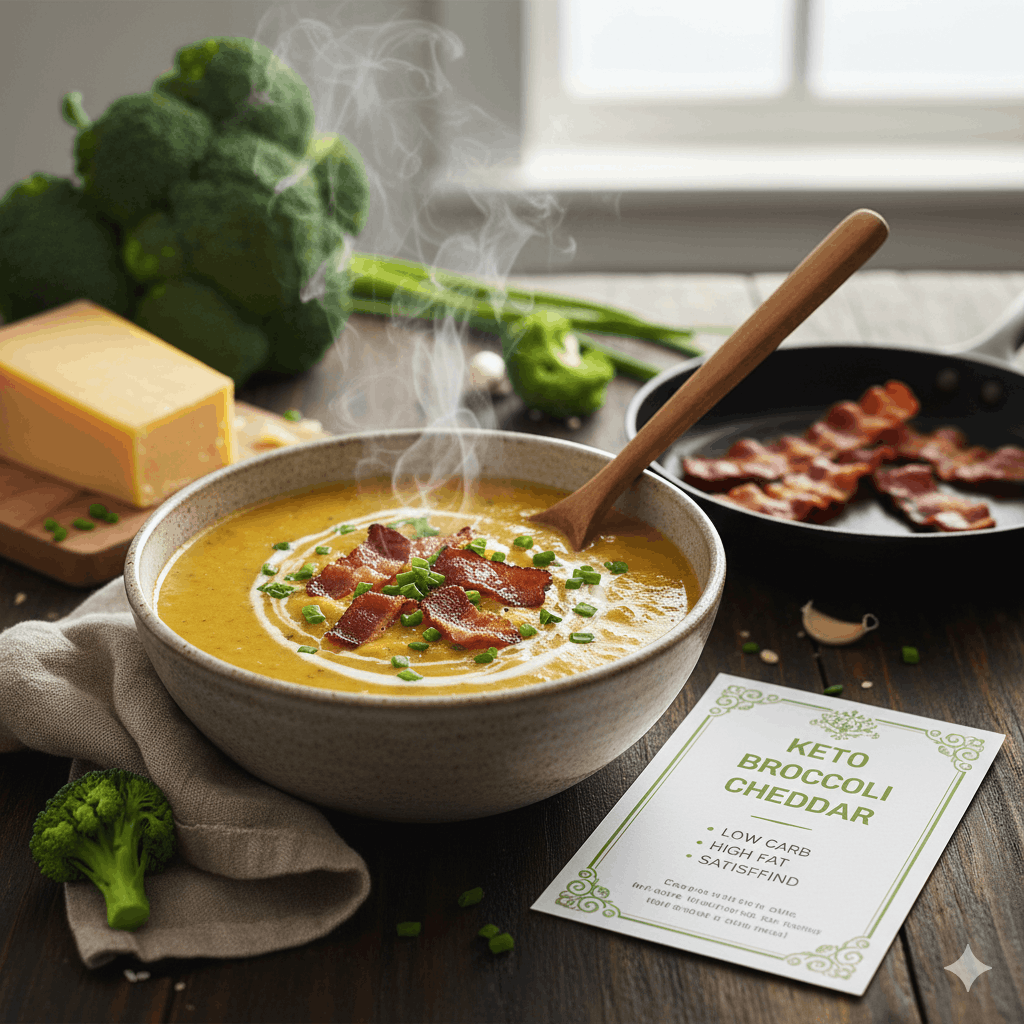
Creamy keto soup feels like comfort food. These are perfect for cold weather or when you want something rich and filling. Keto broccoli cheese soup and keto cauliflower soup are favorites, blending cheese or cream for a smooth finish.
Brothy Low-Carb Soups
Low carb broth soup keeps flavors light. It’s easier to digest, making it ideal for lunch or meal prep. Keto chicken soup or keto beef soup keeps the focus on herbs, protein, and bone broth.
Keto Soup Recipes by Type
Each style offers something different — from hearty meats to warm vegetable blends.
Chicken and Beef Soups
Keto Chicken Soup – Made with bone broth, shredded chicken, celery, and herbs. It’s clean, nourishing, and easy to freeze.
Low Carb Chicken Soup – Similar base, with more vegetables for a lunch-ready option.
Keto Beef Soup – Uses ground or stewed beef, mushrooms, cabbage, and a dash of Worcestershire or soy-free seasoning.
Keto Bone Broth Soup – Ideal for fasting windows or light dinners. Packed with collagen and minerals.
Vegetable-Based Soups
Keto Vegetable Soup – A mix of zucchini, spinach, and tomatoes simmered in broth.
Keto Zucchini Soup – Pureed with cream or coconut milk for a silky finish.
Keto Cabbage Soup – A high-volume, low-carb meal great for weight loss goals.
Keto Spinach Soup – Blended with cream or cheese for extra protein and iron.
Low Carb Vegetable Soup – Focused on variety and fiber while staying under carb limits.
Creamy Comfort Classics
Keto Broccoli Cheese Soup – Smooth, cheesy, and rich in healthy fats.
Keto Cauliflower Soup – A good potato substitute for a creamy texture.
Keto Mushroom Soup – Deep flavor from sautéed mushrooms and herbs, perfect with a touch of cream.
Keto Tomato Soup – Uses tomato paste and cream to create balance without high sugar.
Seasonal and Comfort Favorites
For cold nights, keto soup for cold weather choices like broccoli cheese or cauliflower cream bring warmth. Keto comfort food favorites often mix cheese, cream, and herbs for deep flavor.
Cooking Methods: Stovetop, Slow Cooker, and Instant Pot
Different methods match different schedules.
Stovetop Keto Soup
Fast and adaptable. Ideal for quick keto soup recipes and one pot dinners. Keeps ingredients tender without overcooking.
Keto Soup Slow Cooker or Crockpot Keto Soup
Perfect for busy days. Add ingredients in the morning and enjoy by evening. Slow simmering builds flavor naturally.
Instant Pot Keto Soup
Cuts cook time drastically. Great for meats and dense vegetables that usually need hours to soften. Instant Pot keto soup maintains freshness while saving time.
Dairy-Free and Gluten-Free Keto Soups
Many readers need dairy-free keto soup or gluten-free keto soup options. Replace cream with coconut cream or cashew milk for smooth texture. Skip flour thickeners and use vegetable puree instead.
For dairy lovers, keto soup with heavy cream or keto soup with cheese keeps texture lush. For sensitive eaters, keto soup without cream still tastes satisfying with added fats from avocado or olive oil.
Keto Meal Prep Soups
Keto meal prep soups simplify busy weeks. Prepare in large batches, cool quickly, and store in sealed containers.
- Refrigerate for 3–4 days
- Freeze up to 3 months
- Reheat slowly to preserve texture
Keto soup for lunch reheats well in thermos containers or microwavable jars. A rotation of creamy and brothy soups creates variety in any keto soup meal plan.
Storage and Food Safety Stats
Leftovers last up to four days refrigerated. Frozen soups stay safe for several months but taste best when used within 8–12 weeks. Always chill within two hours of cooking to keep food safe.
Keto Soup Macros and Net Carbs
Keto soups are designed around balance. Average keto soup macros:
- 70–75% fat
- 20–25% protein
- 5–10% carbs
Net carbs per serving usually stay between 2g and 8g. Keto soup for weight loss benefits from higher fat ratios, which increase satiety. Brothy versions often come in under 5g net carbs per bowl.
Tracking net carbs helps tailor portions to fit individual goals. Cream-based recipes naturally carry more calories but maintain keto-friendly ratios.
Troubleshooting Keto Soups
Even experienced cooks can misjudge consistency. Small adjustments fix most issues.
- Too thin – Add blended cauliflower or a handful of shredded cheese.
- Too salty – Add more broth or a squeeze of lemon juice.
- Too fatty – Balance with fresh spinach or zucchini for contrast.
- Too plain – Add smoked paprika, garlic, or chili flakes.
A one pot keto soup often improves in flavor after a day, so leftovers become richer and better balanced.
Keto Soup for Every Season
Keto soup for cold weather brings comfort with creamy bases and slow-cooked meat. Summer-friendly versions like keto vegetable soup or keto zucchini soup taste light and fresh.
Keto dinner soup and keto soup for lunch can rotate all year — brothy during warmer months, creamy when the air cools. These patterns make keto soup recipes practical long-term staples, not temporary fixes.
Keto Soup for Weight Loss
Many people use keto soup for weight loss because it’s portion-controlled and high in satiety. Keto soup without carbs (or with very low net carbs) keeps hunger stable through high-fat, moderate-protein ingredients. Choose broth-based versions for lighter meals or cream-based ones for fuller dinners.
Keto cabbage soup and keto chicken soup are common for calorie-conscious plans. They fill the bowl without increasing carbs, making them useful during stricter phases of a keto diet.
Simple Keto Soup Meal Plan
A three-day rotation keeps prep easy:
Day 1: Keto chicken soup for lunch, keto cauliflower soup for dinner.
Day 2: Keto beef soup for lunch, keto broccoli cheese soup for dinner.
Day 3: Keto vegetable soup for lunch, keto mushroom soup for dinner.
Add broth-based soup for snacks or fasting windows. This setup keeps keto soup macros balanced through variety and ensures meals stay interesting.
Conclusion
Keto Soup Recipes make low-carb eating sustainable, warm, and satisfying. From creamy keto soups with cheese to brothy keto chicken soup for meal prep, each bowl fits into everyday life. By adjusting fats, vegetables, and cooking methods, anyone can create keto friendly soups that match their goals — whether that’s comfort, simplicity, or steady weight loss.