
Gipfeli Recipe: Swiss Crescent Rolls With a Buttery, Flaky Texture
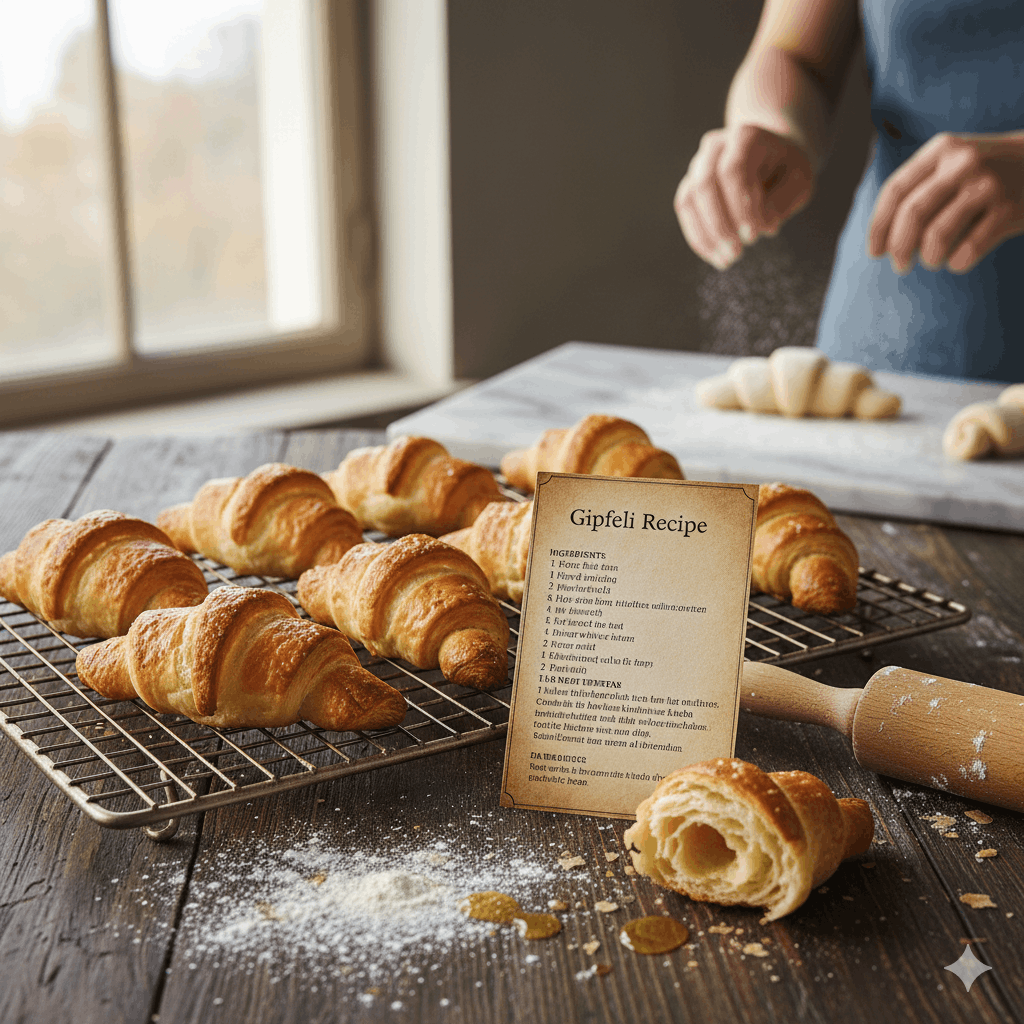
A proper Gipfeli Recipe gives you that Swiss bakery feeling at home: a golden crescent that shatters lightly at the edges, stays tender inside, and tastes rich without feeling heavy. In Switzerland, Gipfeli is the everyday name many people use for a Swiss croissant, especially the classic Swiss butter croissant sold in bakeries for breakfast. This guide focuses on Swiss gipfeli made with yeast and laminated butter, so you get flaky gipfeli layers, a clean crescent shape, and a warm, buttery aroma the moment the tray leaves the oven.
This is a Gipfeli recipe Swiss readers can trust: clear ratios, temperature targets, shaping details, proofing cues, and baking rules that work in real kitchens. You’ll learn how to make gipfeli from start to finish, including Gipfeli dough mixing, butter laminated dough turns, Gipfeli shaping technique, proofing gipfeli dough, and the right baking temperature for gipfeli. By the end, you’ll have homemade gipfeli that look classic and eat like a true Swiss breakfast pastry.
Search intent for “Gipfeli Recipe” and related terms
People searching Gipfeli Recipe usually want a complete method they can follow without guessing. The intent sits in three layers.
Primary intent: make it at home
Searchers want a dependable authentic gipfeli recipe with clear Gipfeli baking steps, ingredient weights, proofing time, and baking temperature. They often add phrases like Gipfeli from scratch, Homemade gipfeli, or How to make gipfeli.
Secondary intent: Swiss identity and comparison
Many want to know what makes traditional Swiss gipfeli different from a French croissant. That’s why terms like Gipfeli vs croissant, Swiss croissant, and Swiss butter croissant appear. They want the Swiss style in taste and texture, not a generic crescent roll.
Practical intent: texture control
Searchers want a buttery gipfeli with crisp layers, not bread-like crescents. That’s why you see flaky gipfeli, soft gipfeli, and golden flaky pastry terms. They want troubleshooting baked in, so they can fix flat layers, butter leaks, or dense centers.
Quick stats that matter for baking Gipfeli at home
Numbers help home bakers succeed. These ranges fit most home ovens and common flour types used for European pastry recipe styles.
Yield and timing (typical home schedule)
- Yield: 10–12 crescents (medium size)
- Active work: 60–90 minutes (spread across steps)
- Chilling and resting: 3–6 hours total
- Overnight option: 10–14 hours in the fridge (hands-off)
Temperature targets
- Dough after mixing: 16–20°C for clean lamination
- Butter for lamination: cool, bendable, not greasy (around 14–18°C texture)
- Proofing room: 24–27°C for steady rise without butter melting
- Oven: 200–220°C depending on your oven’s strength and pan color
Texture indicators
- Properly baked Swiss gipfeli should feel light in the hand, with defined ridges and a dry, crisp surface.
- Interior should show a honeycomb-like structure near the center, with thinner layers toward the tips.
These are practical “kitchen stats,” not theory. They let your Gipfeli pastry rise with layers intact, so you get croissant-style pastry results.
What Gipfeli is, and why Swiss Gipfeli feels different
Gipfeli is a crescent pastry that sits at the heart of Swiss mornings. It’s part of the everyday lineup of Swiss baked goods, often eaten plain, with jam, or alongside coffee. Many bakers describe Swiss-style crescents as a touch firmer and a bit crisper than a French croissant, with a clean butter taste and a balanced sweetness. That’s why a Gipfeli Recipe needs a slightly different mindset: you want clear layers, controlled butter, and a bake that sets the crust without drying the crumb.
Swiss bakeries often sell “Buttergipfeli” to signal a richer version. At home, you control that richness through the butter amount and your lamination turns. A well-made Swiss croissant style Gipfeli keeps the pastry flaky, not greasy, and tender, not cakey.
Ingredients for an authentic Gipfeli recipe
This section is written to match how a Swiss bakery recipe is typically structured: weighed ingredients, clear purpose, and options that keep texture consistent.
Gipfeli ingredients list (makes 10–12)
For the dough
- Bread flour or strong all-purpose flour: 500 g
- Fine salt: 10 g
- Sugar: 45 g
- Instant yeast: 7 g
- Cold milk: 260 g
- Egg: 1 large (about 50 g)
- Unsalted butter (softened): 40 g
For lamination
- Unsalted butter: 250 g
For finishing
- Egg wash: 1 egg + 1–2 teaspoons milk
- Optional: a pinch of sugar for a slightly deeper shine
Notes that help the dough behave
Flour strength matters. Very soft flour can tear during rolling, which breaks layers. Very strong flour can fight you and shrink back, making shaping frustrating. If your flour is very strong, rest the dough longer between rolls.
Butter quality matters even more. For buttery gipfeli that still turn crisp, choose butter that tastes clean and melts evenly. A higher-fat butter helps lamination stay stable, which supports flaky gipfeli results.
Tools and setup for laminated dough
You do not need fancy equipment, yet a few tools make baking gipfeli at home smoother.
- Rolling pin (straight, heavy pin helps)
- Ruler or tape measure (for consistent thickness)
- Baking sheets and parchment
- Pastry brush for egg wash
- Sharp knife or pizza wheel
- Kitchen thermometer (optional, helpful for dough and room temperature)
Clear a fridge shelf and keep a flat spot for the dough. Lamination becomes easier when you can chill the dough fully flat.
Gipfeli dough: the foundation of the Swiss butter croissant style
A Gipfeli Recipe rises and flakes due to two forces working together: yeast lift and butter layers. The dough needs strength to trap air, plus enough tenderness to roll out cleanly.
Dough mixing method
- Add flour, salt, sugar, and yeast to a bowl. Stir so the salt and yeast are separated in the flour.
- Add cold milk and egg. Mix until no dry flour remains.
- Add the 40 g softened butter. Knead until the dough looks smooth and elastic.
You want a dough that feels supple, not sticky. It should pull cleanly from the bowl after kneading. If it feels wet, dust with a small amount of flour, then knead again. If it feels dry and tight, add a teaspoon of milk at a time.
First rest and chill
Shape the dough into a rectangle, wrap, and chill for 45–60 minutes. This rest cools the dough, relaxes gluten, and sets you up for clean lamination. A cold dough is the secret behind butter laminated dough that stays layered.
Laminated dough for Gipfeli: butter lock-in and turns
This is the heart of how to make gipfeli with a true croissant-style pastry texture. Laminated dough is simple in concept: you trap a butter sheet inside the dough, then roll and fold in a repeatable pattern to build layers.
Make the butter sheet
Place 250 g butter between parchment sheets. Pound and roll into a rectangle about 18 x 20 cm, with even thickness. Chill until cool and bendable. It should flex without cracking.
Lock the butter into the dough
Roll the dough into a rectangle about twice the size of the butter sheet. Place butter in the center, fold the dough over it, and seal edges so butter is fully enclosed. Press seams firmly.
At this stage, you have the first “package” of Gipfeli dough and butter ready for turns.
Turns for flaky Gipfeli
A reliable home pattern:
- 1 single fold (letter fold)
- Rest and chill
- 1 double fold (book fold)
- Rest and chill
- 1 single fold (letter fold)
This creates many thin layers without making the dough hard to manage. Resting between turns is part of the method. It keeps the dough relaxed so it rolls without shrinking back.
Rolling rule
Roll with steady pressure from the center outward. If butter starts feeling soft or greasy, stop and chill. That pause is not wasted time; it protects layers and keeps butter trapped.
Resting schedule
Chill 30–45 minutes between turns. If your kitchen is warm, shorten the rolling sessions and chill more often.
Gipfeli shaping technique: classic crescent form
Shaping is where a traditional Swiss gipfeli starts to look like the ones in a bakery case. This is the most visual part of the Gipfeli baking steps.
Prepare the final dough sheet
Roll the laminated dough into a large rectangle about 3–4 mm thick. Work fast enough to keep butter cool, slow enough to keep edges clean.
Trim the edges with a sharp knife. Trimming removes sealed layers at the sides, so the pastry can expand upward in the oven. This small step improves lift and helps create a golden flaky pastry structure.
Gipfeli rolling method: cut and roll
Cut triangles with a base around 8–10 cm and a length around 18–22 cm. Larger triangles make a bakery-sized Swiss croissant style Gipfeli.
- Stretch each triangle gently to lengthen it without tearing.
- Make a small slit in the middle of the base (about 1 cm).
- Roll from the base toward the tip, keeping tension even.
- Curve the ends inward to form the crescent.
Place the tip underneath each roll on the tray. That prevents unrolling during proofing and baking.
If you want a slightly softer bite, roll a touch looser. If you want sharper layering and a taller profile, roll with more tension.
Proofing Gipfeli dough: timing and visual cues
Proofing is where most home bakers lose layers or end up with dense interiors. Proofing gipfeli dough is not about the clock alone. It’s about look and feel.
Proofing setup
Place shaped Gipfeli on trays with space between them. Cover lightly so the surface does not dry out. A warm, still place helps.
Target room conditions: warm but not hot. If butter melts, layers collapse.
Proofing cues
Gipfeli are ready when they look puffy and slightly wobbly. The surface should feel delicate, not tight. A gentle finger press should leave a light mark that slowly springs back.
Under-proofed Gipfeli bake up tight with a bready center. Over-proofed Gipfeli can deflate and bake flat. Aim for a steady rise that keeps shape.
A typical proof time is 1.5 to 2.5 hours, depending on room temperature and yeast activity.
Baking temperature for Gipfeli: crisp crust, soft interior
This is where the whole Gipfeli Recipe becomes a real Swiss bakery recipe experience. Baking must set layers, drive steam, and color the crust.
Oven settings
Preheat to 210°C. If your oven runs hot, drop to 200°C. If your oven is weak, 220°C can help.
Egg wash
Brush with egg wash right before baking. Use a light hand. Heavy egg wash can glue layers along the cut edges.
Bake time
Bake 14–18 minutes, rotating once if your oven browns unevenly. The goal is deep golden color on top and a fully baked base.
Doneness cues
- The crust looks evenly browned, not pale.
- The pastry feels light when lifted.
- The bottom is set and dry, not soft.
Rest on a rack for at least 15 minutes. Fresh flaky gipfeli can feel fragile right out of the oven; the crumb sets as steam releases.
What “easy Gipfeli recipe” can mean without losing Swiss character
Some readers want an easy gipfeli recipe that stays close to the real thing. The closest shortcut that still tastes authentic is an overnight cold rest.
Overnight method (recommended shortcut)
After the final turn, wrap the dough and chill overnight. Next day, roll, shape, proof, and bake. This spreads the work across two days and makes the dough calmer to handle.
This keeps the structure of laminated dough and still gives buttery gipfeli flavor. It’s easier in practice since the dough stays cold and predictable.
Gipfeli vs croissant: a practical comparison for home bakers
This section answers a common question behind Swiss croissant searches.
Shape and serving style
Both are crescent pastries. Gipfeli often keep a slightly tighter roll, with a clean, neat profile for breakfast.
Texture
A French croissant often aims for very open honeycomb interior and a richer butter hit. Swiss-style Gipfeli often lean toward crispness and a slightly firmer bite.
Sweetness
Gipfeli usually taste mildly sweet. That makes them easy to pair with jam or eat plain.
What matters in your kitchen
The method in this Gipfeli Recipe works for both, yet the Swiss feel comes from controlled sweetness, clean shaping, and a bake that leans crisp.
Troubleshooting: fix problems fast and keep layers
A strong Gipfeli Recipe includes repairs. These are the issues most people hit when making Gipfeli from scratch.
Butter leaking during baking
Common cause: butter too warm during rolling or proofing. Chill the dough more often during turns. During proofing, keep the room warm, not hot.
Layers look “bready,” not flaky
Common cause: too few turns, butter melting into dough, or dough pressed too hard. Use steady rolling pressure and chill between turns. Keep butter bendable, not soft.
Gipfeli look flat
Common cause: over-proofing or weak shaping tension. Stop proofing once the pastry looks puffy and delicate. Roll triangles with even tension and keep the tip tucked under.
Tips burn, center stays pale
Common cause: triangles too thin at the tips or oven hot spots. Cut consistent triangles and rotate trays. If tips brown too fast, lower oven temperature slightly and extend bake a minute or two.
Interior feels dry
Common cause: overbaking or too much flour during rolling. Use minimal dusting flour and bake to deep golden, then stop.
Variations that stay within Swiss bakery style
A well-written post on Swiss baked goods often includes options readers recognize.
Classic Gipfeli
This is the base method above. It’s the most widely recognized classic gipfeli profile.
Extra-butter version (Swiss butter croissant style)
Add 10–20 g more butter to the dough, not the lamination. That keeps lamination stable and increases richness without making butter leak.
Softer Gipfeli
For soft gipfeli, proof slightly longer, then bake at the lower end of the range (around 200°C) so crust sets gently. Do not underbake; underbaked pastries feel gummy.
Sweeter breakfast pastry
Add 10–15 g more sugar. The dough browns faster, so watch bake color.
Storage, freezing, and reheating
Fresh is best, yet homemade gipfeli can still taste great the next day with smart handling.
Same-day storage
Cool fully, then keep in a paper bag for a few hours. For longer storage, use an airtight container once fully cool.
Next day reheating
Warm in a hot oven for 5–7 minutes. That brings back crispness and keeps the center tender.
Freezing options
Freeze unbaked: Shape the Gipfeli, freeze on a tray, then store in a freezer bag. Thaw in the fridge overnight, then proof and bake.
Freeze baked: Cool fully, freeze, then reheat in the oven until hot and crisp.
Freezing works best when the dough was laminated cleanly and proofed correctly. Good lamination survives cold well, which is another reason a careful Gipfeli Recipe pays off.
Step-by-step recap: Gipfeli baking steps you can follow
This condensed walkthrough supports readers who scroll back and forth during baking.
Day 1 (same-day method)
Mix and chill
Mix dough, knead smooth, chill 45–60 minutes.
Laminate
Butter sheet, lock-in, then 3 turns with chilling between.
Roll and shape
Roll to 3–4 mm, trim edges, cut triangles, roll crescents.
Proof
Warm spot until puffy and delicate.
Bake
Egg wash, bake 14–18 minutes at 200–220°C until deep golden.
Day 1–2 (overnight method)
After turns
Chill dough overnight.
Next day finish
Roll, shape, proof, bake.
This recap supports readers who want easy gipfeli recipe pacing without changing the real method.
Final thoughts
A great Gipfeli Recipe is not about rushing. It’s about keeping the butter cool, giving the dough time to relax, shaping with intention, and baking until the crust turns truly golden. Follow the temperature cues and the visual proofing signs, and you’ll end up with Swiss gipfeli that taste like a bakery: crisp outside, tender inside, and full of buttery layers that crackle when you pull one apart.