Gallo Pinto Recipe: Costa Rican Rice and Beans the Traditional Way
Gallo pinto is one of those dishes that looks humble and tastes far bigger than its ingredients. It is gallo pinto rice and beans cooked in a way that turns simple cooked rice and beans into a savory rice dish with a speckled look and a very specific smell: onions, garlic, warm rice, and that tangy seasoning many people associate with Costa Rican breakfasts.

If you have searched Gallo Pinto Recipe online, you probably wanted one of three things. You might want an authentic gallo pinto recipe that tastes like the one served in small sodas (local diners) in Costa Rica. You might want how to make gallo pinto from pantry staples. Or you might want to settle the confusion between Costa Rican gallo pinto and Nicaraguan gallo pinto, since both countries love it and serve it often as a breakfast dish.
This guide covers the full niche: history and meaning, gallo pinto ingredients, gallo pinto seasoning, Lizano sauce and swaps, gallo pinto step by step, plus serving plates for a gallo pinto breakfast that fits a Latin American breakfast table. You will see a weeknight version too, so easy gallo pinto stays realistic for home cooking.
What is gallo pinto?
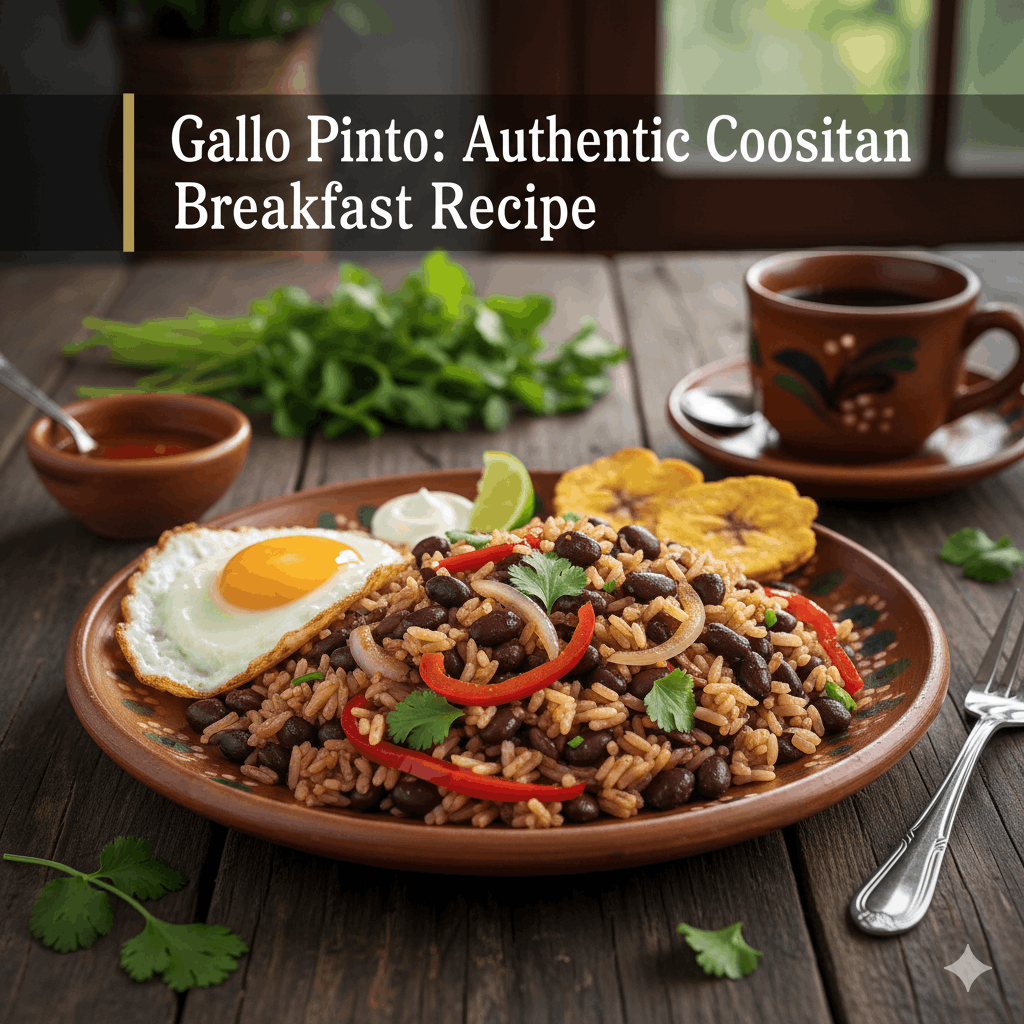
Gallo pinto is a simple rice and beans dish from Central America, known for its “spotted” look once the beans and rice mix together. The name translates to “spotted rooster,” a reference to the speckled appearance of rice dotted with beans.
In everyday terms, think of it as a fried rice and beans skillet dish, not deep-fried, just sautéed and warmed until the flavors blend. It can be served as a main dish, a side dish, or the base of a bigger plate with eggs, plantains, cheese, and tortillas.
Gallo pinto sits inside a bigger family: Central American rice and beans dishes, plus the wider Latin cuisine recipe category where rice, beans, onions, herbs, and a few condiments do most of the work.
Traditional gallo pinto vs regional styles
People often ask if gallo pinto is Costa Rican or Nicaraguan. The honest answer: both Costa Rica and Nicaragua treat gallo pinto as their own. That shared love is part of why it shows up everywhere from family kitchens to hotel breakfasts and small roadside cafés.
Costa Rican gallo pinto (the flavor cue)
Costa Rican gallo pinto is commonly tied to Lizano sauce, a tangy condiment that gives the dish a signature taste. Many home-style versions use black beans in some regions, plus onion, sweet pepper, and cilantro. The final spoon of sauce and the fresh herbs matter a lot here.
Nicaraguan gallo pinto (the texture cue)
Nicaraguan gallo pinto often leans more on red beans and a slightly different rice preparation, with a focus on the beans’ cooking liquid and the rice’s seasoning. It is widely served as a Nicaraguan breakfast dish too, often alongside eggs, cheese, and plantains.
None of this needs to feel like a rivalry on your plate. The method is similar across borders: day-old rice, cooked beans, aromatics, and a skillet finish.
Gallo pinto ingredients and why each one matters
A traditional gallo pinto tastes right when the rice stays separate, the beans coat the grains without turning the dish wet, and the aromatics stay fragrant.
Core ingredients
Rice: day-old white rice is the classic choice. This is a leftover rice recipe at heart, and that is a good thing. Chilled rice dries a little, so it stays fluffy in the pan.
Beans: black beans and rice is common in many Costa Rican tables, though red beans appear in some regions and in many Nicaraguan versions. Use cooked beans, not crunchy. Keep some bean liquid.
Onion and sweet pepper: this duo gives the dish its base aroma. If sweet pepper is not available, use mild bell pepper.
Garlic: a small amount goes a long way. It supports the garlic and onion rice feel without taking over.
Cilantro: fresh at the end keeps the dish bright. This is where the cilantro rice and beans phrase comes from in real life.
Fat: oil or a little butter helps the rice toast lightly in the skillet and keeps the aromatics glossy.
Salt and pepper: keep salt moderate if you plan to use Lizano sauce, since the condiment brings its own salty-tangy punch.
The Costa Rican seasoning element
Lizano sauce: Many people link this condiment directly with traditional gallo pinto in Costa Rica. It adds tang, a little sweetness, and a savory edge that’s hard to copy exactly with one ingredient.
This set of gallo pinto ingredients is small on purpose. The dish was built to be practical, filling, and repeatable.
Why leftover rice works best
Gallo pinto is one of the best examples of how leftovers can taste better than “fresh.” Freshly cooked rice holds more steam and moisture. In a skillet, that steam turns into stickiness. Day-old rice dries out a bit in the fridge. That dryness is what you want for gallo pinto.
If you only have fresh rice, you can still make homemade gallo pinto. Spread the rice on a plate or tray, let it cool, then refrigerate it for at least 30 to 60 minutes. It won’t match day-old rice perfectly, but it will behave much better in the pan.
How to make gallo pinto (gallo pinto step by step)
This is a traditional home-style gallo pinto cooking method with notes for texture. It is written as a Costa Rican-style base, with room to shift toward a Nicaraguan style by changing the beans and holding back on Lizano.
Prep notes
Rice: chilled, day-old rice breaks apart easily. Separate clumps with your fingers or a fork.
Beans: drain the beans, but keep bean liquid. You want a few spoonfuls of liquid available. That liquid stains the rice and creates the “spotted” look.
Aromatics: dice onion and sweet pepper small so they melt into the rice instead of sitting in chunks.
Gallo pinto cooking method in the skillet
Step 1 — Warm the pan
Heat a wide skillet over medium heat. Add oil. Let it warm so the onions sizzle gently, not burn.
Step 2 — Build the garlic and onion rice base
Add onion and sweet pepper. Cook until softened and fragrant. Add garlic near the end, stirring for a short moment.
Step 3 — Add beans and a splash of bean liquid
Stir in beans, then add a small amount of bean liquid. Start with one or two tablespoons. Mix and let it bubble gently. The goal is color and flavor, not soup.
Step 4 — Fold in rice
Add the chilled rice. Use a spatula to fold and press lightly. Let the rice warm through. Add another small spoon of bean liquid only if the rice looks dry and pale.
Step 5 — Skillet-fried finish (fried rice and beans style)
Let the mixture sit untouched for a minute or two, then stir. This creates little toasted spots. Repeat once more. This is the “fried rice and beans” idea people mean: a skillet finish with light toasting.
Step 6 — Season, then taste
Add salt and pepper carefully. If using Lizano sauce, add it in small splashes, stir, then taste again.
Step 7 — Cilantro at the end
Turn off heat and fold in chopped cilantro. This keeps the herb fresh instead of dull.
That is your traditional gallo pinto: fluffy grains, speckled color, fragrant aromatics, and a tangy finish if you chose Lizano.
Gallo pinto seasoning: getting the taste “right”
Gallo pinto seasoning is simple, yet the balance matters. A few small choices change the final flavor a lot.
Lizano sauce: how to use it
In a Costa Rican gallo pinto, Lizano sauce is often added near the end or stirred in once the rice and beans are fully warm. Add a small splash, mix, taste, then decide if you want more. Too much can dominate and make the dish taste more like condiment than rice and beans.
If you cannot get Lizano sauce, many cooks reach for Worcestershire-style sauce as a rough substitute. It won’t taste identical, but it can add that savory-tang note people miss.
Onion, pepper, garlic: the base
This trio is the backbone of the dish. Cook it until softened. Raw onion in gallo pinto tends to taste sharp and distracting.
Cilantro: late, fresh, generous
Cilantro rice and beans is not just a phrase. It is a real effect. A handful of cilantro at the end makes the plate smell like a breakfast kitchen.
Bean liquid: the quiet secret
A little bean liquid helps the rice pick up color and flavor. Too much turns the dish wet and heavy. Add it in spoonfuls, not in pours.
Easy gallo pinto (weeknight version)
Easy gallo pinto is the same dish with fewer moving parts. This is useful when you have cooked rice and beans ready and want dinner fast.
Use canned beans, rinsed, plus a small splash of water with a pinch of salt to replace bean liquid. Keep the onion and garlic, skip the pepper if you want. Finish with cilantro and a squeeze of lime if you like citrus with rice and beans.
This version still counts as homemade gallo pinto. It still tastes good. It just avoids long prep.
Homemade gallo pinto meal ideas: breakfast, lunch, dinner
Gallo pinto is famously served in the morning, yet it works all day.
Gallo pinto breakfast: a classic plate
A gallo pinto breakfast often sits at the center of a Latin American breakfast plate. Common pairings include eggs (fried or scrambled), fried plantains, tortillas, cheese, and a spoon of sour cream or natilla. You can add sliced avocado and fresh fruit too.
The key is contrast: warm rice and beans, creamy side, salty bite, something sweet like fruit or plantains.
Lunch and dinner plates
For lunch, gallo pinto can be a side next to grilled chicken, fish, or a stew. For dinner, it can be the base of a bowl with sautéed vegetables and a protein.
It fits vegetarian rice and beans plates easily. Add roasted vegetables, a fried egg, or sautéed mushrooms for a satisfying meat-free meal.
Healthy rice and beans recipe notes
A healthy rice and beans recipe is less about removing ingredients and more about building a balanced plate.
Portion of rice: keep it moderate
Portion of beans: a bit higher helps add protein and fiber
Oil: use enough for a good skillet finish, not so much that the dish feels greasy
Add vegetables: bell pepper, onion, tomatoes, cabbage salad, or sliced avocado on the side
Gallo pinto already sits in a good place for many people. It is filling, it’s plant-based by default, and it can be scaled to your appetite.
Costa Rican vs Nicaraguan gallo pinto: quick comparison you can taste
If you want to cook both styles at home, keep the base method the same and change two things:
Beans: try black beans for a Costa Rican feel, red beans for a Nicaraguan feel.
Condiment: use Lizano sauce in the Costa Rican version, skip it in the Nicaraguan version and lean on bean liquid and aromatics.
Both versions land in the same comfort zone: a simple rice and beans dish with deep flavor from a skillet finish and well-cooked onions.
Common problems and fixes
My rice turns mushy
The rice was too fresh or too wet. Chill it. Break up clumps before it hits the pan. Add bean liquid in small spoonfuls only.
My dish tastes flat
Raise aromatics: onion, garlic, pepper, cilantro. Add a small splash of Lizano sauce if you are going for Costa Rican gallo pinto. Check salt at the end.
My dish looks pale
Add a bit more bean liquid and let it cook a moment. Color comes from the beans, not from browning alone.
My cilantro tastes dull
Cilantro went in too early. Add it after heat is off.
Wrap-up
A good Gallo Pinto Recipe is not about fancy technique. It is about timing and texture: day-old rice, cooked beans with a bit of their liquid, a fragrant onion and garlic base, and a skillet finish that warms everything through and lightly toasts the rice. From there, you can keep it traditional with Lizano sauce and a full gallo pinto breakfast plate, or keep it simple as an easy gallo pinto dinner that still tastes like home.