Food jalbiteblog trend justalittlebite is a phrase that shows up when people want fast clarity about a trend-driven food blog voice: short, readable posts, simple recipes, quick reviews, and food ideas that feel current. The search usually comes from curiosity. Someone sees the wording on a post, a screenshot, or a shared snippet, then types the phrase to find the original page or a clear explanation of what it refers to.
This article covers the full niche behind food jalbiteblog trend justalittlebite. It explains the content style, why it spreads, what readers expect from Jalbiteblog food content, and how a JustALittleBite food blog format fits food blog trends. It also breaks down content formats that keep readers engaged, plus practical publishing benchmarks you can track on your own site.
What “food jalbiteblog trend justalittlebite” refers to
Food jalbiteblog trend justalittlebite points to a content pattern more than a single dish. It blends three things:
Jalbiteblog as a familiar label for trend-focused food posts
JustALittleBite as the “small portion, quick try, quick verdict” theme
Trend coverage that stays friendly and simple
People do not search this phrase to read a long essay about internet culture. They want quick answers.
The plain meaning in one paragraph
Food jalbiteblog trend justalittlebite usually means bite-sized food discovery content. That can be a mini recipe, a short food culture article, a quick online food review, or a compact “what’s trending” post. The tone stays light. The writing stays skimmable. The goal is to help the reader decide what to try next.
Why the exact wording appears in searches
This wording shows up in two common scenarios:
A reader wants the original page again and types the phrase as they remember it.
A reader is checking whether the phrase is a real series, a page title, or a repeated label used across viral food blog posts.
The search is a mix of informational intent and navigational intent. That mix changes how you structure the page that targets this keyword.
Reader intent and what the page must deliver fast
The reader wants four things, in this order:
A clear definition
Examples that make the definition real
A way to copy the idea at home
A sense that the page was written by a real person
A page targeting food jalbiteblog trend justalittlebite works best when the opening is calm and direct. No hype. No vague promises. The first 120 to 180 words should settle the question.
The niche behind it: trend-driven food blogging that feels human
Food blogging has shifted. Many readers now discover recipes through short clips, quick screenshots, and a friend’s forwarded message. That shift shapes food blogging trends 2025 and it shapes what ranks.
A strong SEO food blog in this niche does not compete on long, dramatic storytelling. It competes on clarity, trust, and repeatable formats that readers understand right away.
What readers call “trends” in real life
Trends are not only viral challenges. Readers use “trend” to describe:
Ingredients that suddenly show up in many recipes
Restaurant-style snacks made at home
Drinks that look good on camera
Quick sauces and seasoning mixes
Comfort food with a simple twist
Healthy food trends that feel easy, not strict
A culinary trend blog that explains those patterns well can earn repeat visitors, even after a trend fades.
The content formats that win in this niche
Food jalbiteblog trend justalittlebite works best when the site has clear formats. Readers recognize them, trust them, and share them. Search engines pick up that consistency too.
Trend explainer posts
These posts answer “what is it” and “why people care.” Keep them focused.
What to include in a trend explainer
Definition in one short paragraph
Taste and texture in plain words
What to buy
Home version plan
Common mistakes and fixes
Simple storage notes
Trend explainers can pull in readers looking for trending food articles and latest food updates, even if they are new to the site.
Viral recipe content with small portions
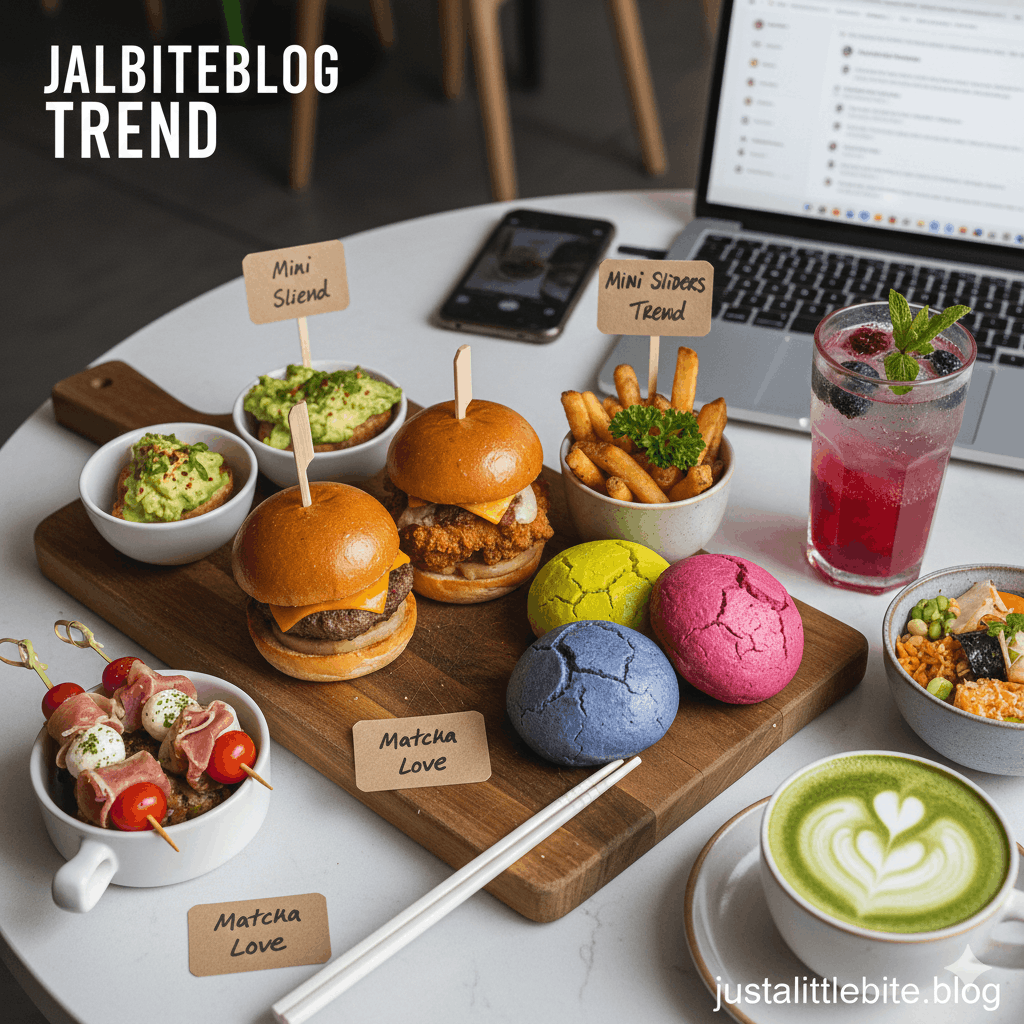
This is the “JustALittleBite” heart of the niche: mini versions, small batch, quick try.
Examples that fit the idea:
Mini sandwiches, sliders, bite-size wraps
Snack boards built around one main ingredient
Two-serving desserts
Single-pan snack recipes
Mini tasting menus for weekends
This format overlaps well with trending recipes online and it fits a recipe trend blog category.
Online food reviews that stay honest
Online food reviews perform when they help a reader spend money wisely, save time, or avoid disappointment. Readers respect clear opinions paired with concrete details.
A food discovery blog can do reviews in a simple structure:
What it is
Price range and portion feel
Taste notes
Texture notes
Who will like it
Who may skip it
A home alternative idea
Food culture articles with a simple angle
Food culture articles can rank when they answer a narrow question. Instead of “the history of street food,” pick an angle tied to what people cook and eat now.
Examples:
Why small plates feel popular again
Why spicy-sweet combos keep showing up
Why creamy sauces return every winter
Why “snack dinner” became normal
A food storytelling blog in this niche should keep culture pieces grounded in real kitchen behavior.
Curated trend pages
These pages collect many smaller posts into one organized hub.
Examples:
Food blog trends hub
Street food blog posts hub
Healthy food trends hub
Home cooking trends hub
Trending recipes online hub
These hubs can become the most visited pages on the site when internal linking stays tidy.
What makes a post “viral” in food blogging
Viral food blog posts tend to share certain traits. You can build those traits into your process without copying anyone.
The “fast scan” rule
A reader should understand the idea in 8 seconds. That means:
A headline that says what it is
A short intro that names the benefit
Steps that are easy to follow
A photo plan that matches the steps
The “one clear hook” rule
Pick one hook, not five.
Examples:
15-minute recipe
One bowl
Three ingredients plus pantry basics
No oven
One key ingredient (tomatoes, goat cheese, pickles)
The “repeatable” rule
Readers share recipes that feel repeatable. They can imagine making it again next week. That is why simple sauces, snacks, sodas, and quick dinners travel far online.
How Jalbiteblog food content should be structured
Jalbiteblog food content should feel consistent across the whole site. Readers notice when a site has no system. They click away.
A practical system has:
One post template for recipes
One post template for trend explainers
One post template for reviews
One post template for culture articles
One hub template for curated collections
Recipe post template for this niche
Keep this simple and reliable.
Intro: 2 to 3 short paragraphs
What the recipe is
What it tastes like
Ingredients with short notes
Steps with clear cues
Swaps
Storage
Fixes for common problems
Final thoughts
FAQs
This structure supports a SEO food blog plan and it reduces bounce from readers who want quick clarity.
Trend explainer template for this niche
Intro
Definition
Why it got attention
What counts as the trend
Examples
Home version
Mistakes and fixes
Final thoughts
FAQs
This format works well for trending food articles and recipe-adjacent content.
Food blogging trends 2025 that shape this niche
Food blogging trends 2025 are strongly influenced by how people browse and cook.
Shorter formats, stronger clarity
Readers have less patience for long preambles. That does not mean short content always wins. It means the useful part must appear earlier. That is a big difference.
High-interest categories: drinks, snacks, quick dinners
Digital food media pushes drinks and snack content fast. That pulls readers toward:
Dirty sodas and flavored sodas
Simple mocktails
Seasonal warm drinks
Air-fryer snacks
Sheet-pan dinners
One-pot soups
A food blogging platform that is built around these categories can attract steady interest across seasons.
The rise of “mini” cooking
Mini cooking is not only cute. It solves real problems:
Smaller households
Budget control
Trying a trend without waste
Portion control without strict dieting
That fits the JustALittleBite food blog angle naturally.
Building a site around this niche
A food blogging niche needs boundaries. Without boundaries, the site becomes confusing. Confusing sites do not earn loyal readers.
Pick your core promise
A clear promise can be:
Food blog trends explained with simple home versions
Trending recipes online with small-batch options
Online food reviews with honest taste notes
Food culture articles tied to real home cooking trends
You can cover more than one, yet the homepage and category structure must show the main focus.
Suggested category structure for a Jalbiteblog-style site
Food blog trends
Recipe trend blog
Online food reviews
Food culture articles
Street food blog posts
Healthy food trends
Home cooking trends
Food news blog
This structure supports internal linking and helps readers browse by intent.
Practical performance benchmarks you can track
You asked for stats. Instead of risky “internet-wide” claims, these are site benchmarks you can track and improve. They keep the content grounded.
Engagement benchmarks for trend posts
Aim for an average time on page that matches the page length. For a 1,500 to 2,000 word trend explainer, many sites try to reach 1 minute 30 seconds to 3 minutes average time on page. For a 3,000 word guide, many sites aim for 3 to 5 minutes. These are working targets, not universal rules.
Scroll depth checkpoints
A strong post often holds readers past the first screen. Track how many reach:
The examples section
The steps section
The storage section
If most readers drop before examples, the intro is too slow or too vague.
Internal click targets
A good curated page should send readers to at least one other post. Track internal clicks from:
Hubs to posts
Posts back to hubs
Recipes to related recipes
These internal pathways are a core part of SEO food blog growth.
Food content marketing for this niche without sounding salesy
Food content marketing in this niche works when it feels like a helpful editorial plan rather than a sales pitch.
Content that invites sharing
Sharing comes from usefulness. A share happens when the reader thinks:
My friend will try this
This solves a quick problem
This explains a trend I keep seeing
This review saves money
That is the foundation of viral food blog posts that last beyond one week.
Content that earns trust
Trust is earned through small details:
Exact cook cues
Clear storage windows
Honest results
Simple swaps that work
A gourmet food article can still be beginner-friendly when it explains texture, salt, acid, and heat in plain language.
Food trend analysis that stays grounded
Food trend analysis can be practical. It does not need dramatic predictions.
A simple “trend lifespan” checklist
A trend tends to last longer when:
Ingredients are easy to find
The method is simple
The taste fits common preferences
The food looks good in a quick photo
The cost feels reasonable
A trend tends to fade faster when:
Ingredients are expensive
The method is messy
The result is fragile and hard to repeat
The taste is extreme
A food news blog can use this checklist to write better “will it last” posts that feel honest.
Creating content that covers your keyword list naturally
You shared a keyword group around this niche. This section shows where each keyword fits so the page stays readable.
Where the keyword group fits inside the article
Food jalbiteblog trend justalittlebite: the core topic and repeated phrase
Food blog trends and food blogging trends 2025: trend context sections
JustALittleBite food blog and Jalbiteblog food content: identity and format sections
Viral food blog posts and viral recipe content: sharing and format sections
Trending food articles and trending recipes online: post types and hub pages
Online food reviews: review template and trust section
Food lifestyle blog and food storytelling blog: voice and editorial direction
Modern food blogging and digital food media: behavior and discovery patterns
Food culture articles: culture format section
Popular food websites: why readers cross-check content
Culinary trend blog and recipe trend blog: category naming and hub plan
Food influencer content: discovery and spread
Food discovery blog: site purpose
Food blogging niche: site boundaries
Gourmet food articles: elevated posts that stay readable
Healthy food trends: a category that fits well with “mini” cooking
Street food blog posts: trend source category
Home cooking trends: the core reader behavior
Latest food updates: curated trend updates
Food content marketing: distribution without pushy tone
SEO food blog: structure, hubs, internal linking
Food blogging platform: format and publishing system
Food news blog: trend update style
That coverage keeps the page aligned with the niche without turning it into a list.
Final thoughts
Food jalbiteblog trend justalittlebite is best treated as a niche of trend-focused food blogging built around short, useful formats: explainers, mini recipes, reviews, and culture pieces tied to real eating habits. The sites that win in this space keep a clear structure, publish consistent post types, and earn trust through small details that help readers cook and decide quickly. Build hubs, write clean templates, keep the tone human, and let the content do the work.