
Jalbiteblog food trends justalittlebite is the kind of phrase people search when they want a clear, readable explanation of what’s trending in food right now, plus ideas they can actually try. The wording feels like a label you’d see on a post title, a shared screenshot, or a trend roundup that mixes short recipes with simple commentary. It also suggests a very specific style of writing: quick to scan, easy to follow, and focused on modern food ideas rather than complicated cooking.
In the last few years, food trends have become “screen-first.” People discover dishes through social media food trends, then look for a stable page that explains what the trend is, what it tastes like, and how to make it at home. That is where a food trends blog format works well. It sits between entertainment and real cooking, and it helps readers stop guessing.
This guide covers the full niche behind jalbiteblog food trends justalittlebite. You’ll learn what the phrase usually refers to, why viral food trends spread the way they do, which trend categories keep returning, and how to turn a trend into something repeatable in a home kitchen. You’ll also find practical ways to write trend posts that feel human, along with ideas for quick bite recipes, small portion recipes, and snack food trends that fit real routines.
What jalbiteblog food trends justalittlebite usually refers to
This keyword points to a combined idea, not one official brand definition. Readers normally interpret it as:
Jalbiteblog as a place for trend-focused food content
justalittlebite as a “small portion, quick try” style
food trends blog posts that mix inspiration with practical steps
People searching this phrase usually want two outcomes. First, they want information about the keyword itself: what it means and why it appears online. Second, they want a useful trend roundup that goes beyond vague buzz and gives them something to do next.
The common intent behind the query
Most searches for jalbiteblog food trends justalittlebite have mixed intent.
Informational intent: “Explain the trend list and give examples.”
Navigational intent: “I saw a page using this label and want it again.”
That mix affects how you write the page. The opening has to define the phrase quickly. After that, the page has to behave like a trend guide, because the reader expects latest food trends, viral food trends, and trending food recipes in one place.
Why “justalittlebite” matters as a concept
The word justalittlebite signals a preference that many readers have right now: trying new foods in smaller quantities. It shows up in how people cook and eat:
They want a taste without wasting ingredients.
They want small portion recipes that suit small households.
They like snack food trends because they feel low-effort.
They enjoy “mini” versions that look good and cook faster.
This is not only about portion control. It is also about curiosity. People want to explore popular food culture without committing to a complicated recipe that they might not repeat.
Why food trends spread faster now
Food blogging trends have changed because discovery has changed. A decade ago, many readers found recipes through search, newsletters, and bookmarked sites. Today, a lot of discovery comes from online food influencers, short clips, and photo-first posts.
That shift creates two big effects:
Trends move fast and repeat fast.
Readers want stable pages that explain trends in plain language.
A food trends blog can succeed when it becomes the “stable page” people come back to after they see something in a feed.
Social media food trends: how the loop works
Most social media food trends follow a familiar loop:
A creator posts a dish that looks striking.
Others copy it and add small twists.
Viewers search for the name, the recipe, or “what is this.”
Blogs publish trend explainers and trending food recipes.
The trend either becomes part of home cooking trends or fades.
A page that targets jalbiteblog food trends justalittlebite should explain this loop in a calm way, then move straight into practical examples.
TikTok food trends vs Instagram food ideas
TikTok food trends tend to push quick transformations: fast recipes, strong visual moments, and “before/after” reveals. Instagram food ideas often lean more polished: creative food presentation, curated plates, and food photography trends that make a dish look special.
Both platforms influence what people cook. The difference is the pacing. TikTok pushes speed and novelty. Instagram often pushes style and mood. If your content covers both, readers feel understood, because they are usually bouncing between these sources.
Food photography trends that shape what people cook
Food photography trends matter because food is judged quickly online. Certain visuals repeat because they work:
Close-up textures like melty cheese, crisp crusts, glossy sauces
Bright colors like citrus, berries, herbs
Tall layers like stacked desserts and sandwiches
Clean backgrounds with one main focal point
This shapes modern food ideas in a quiet way. Recipes that photograph well are copied more often. That does not mean taste comes second, but it does explain why some dishes go viral faster than others.
What readers expect from a food trends blog page
When readers land on a jalbiteblog food trends justalittlebite page, they expect structure. Not a long ramble. Not a wall of text. They want sections that help them pick a trend and act on it.
A strong trend page includes:
A short definition up front
A clear list of trends with explanations
Trending food recipes or easy “home version” ideas
Notes that reduce failure, like texture tips and storage tips
A wrap-up that helps the reader choose what to try first
FAQs that answer real questions
This is also the safest way to cover many keywords without turning the page into a keyword list.
Latest food trends that keep showing up
Latest food trends change by season, yet the categories are surprisingly stable. The specific dish changes, but the pattern remains.
Below are the trend categories that most readers recognize quickly. Each one includes a practical home angle, so the page stays useful, not just descriptive.
Viral food trends built around texture
Texture is one of the strongest engines behind viral food trends. When people describe a trend, they often describe how it feels:
Crispy edges
Creamy centers
Chewy bites
Crunchy toppings
Hot-and-cold contrast
Why texture trends work
Texture is easy to show in a short clip. It also creates cravings fast. A crunchy bite or a creamy pull tells the viewer what to expect without words.
Home-friendly ideas
Quick bite recipes built around texture work best when they are simple. Try:
A crispy toast base with a soft topping
Roasted snack bites with a crunchy finish
A warm dessert with a cold topping
These can be written as small portion recipes to match the justalittlebite theme.
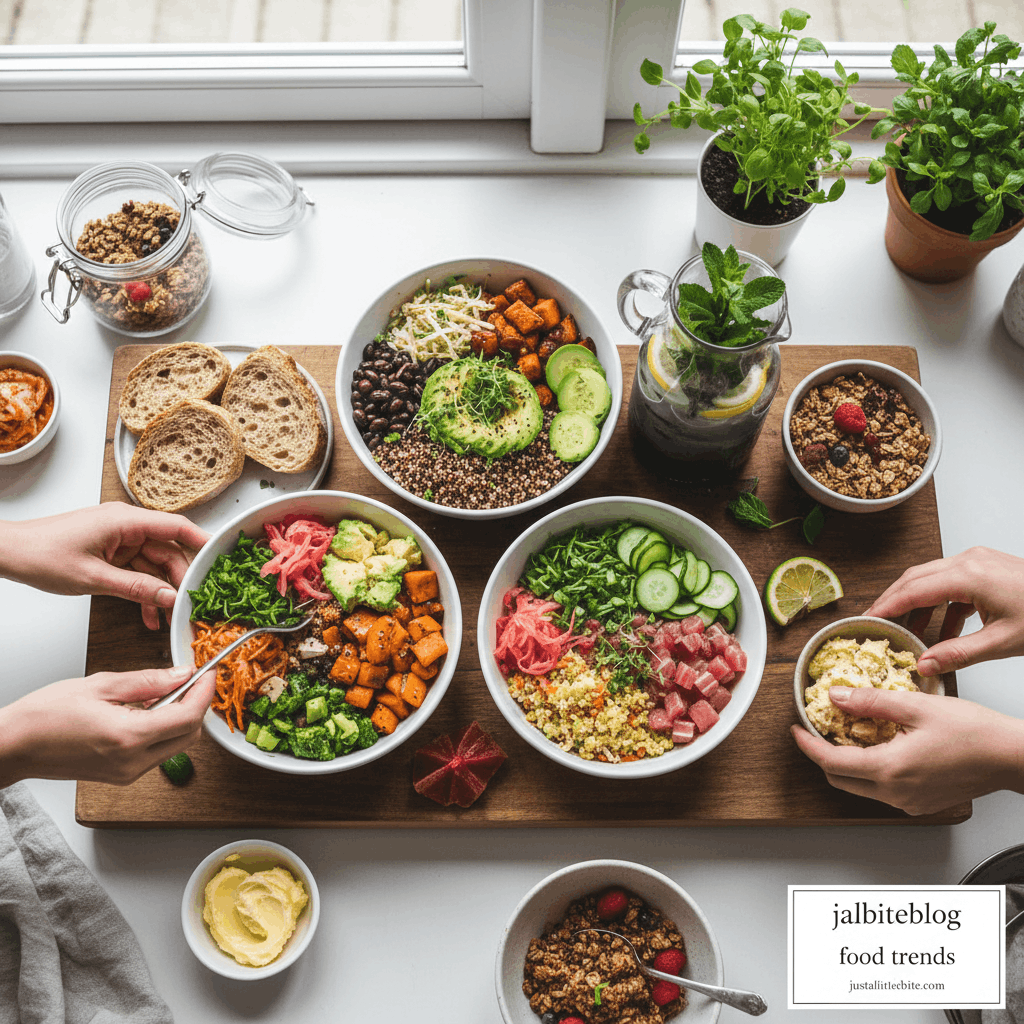
Trending food recipes based on “mix and match” bowls
Bowls remain popular because they are flexible. They also fit home cooking trends because they use leftovers well.
What makes bowl trends popular
They are easy to customize.
They suit many diets without making the meal feel restrictive.
They make creative food presentation simple, because a bowl can look colorful quickly.
How to write bowl trends as a food trends blog post
Focus on the pattern, not just one bowl.
Base: rice, noodles, greens, roasted vegetables
Protein: beans, eggs, chicken, fish, tofu
Crunch: seeds, nuts, toasted breadcrumbs
Sauce: creamy, spicy, citrusy, herb-based
When a reader understands the pattern, they can repeat it without needing exact instructions every time.
Street food trends turning into home cooking trends
Street food trends become home cooking trends when they meet two conditions: ingredients are easy to find, and the method can be simplified.
What readers want from street food blog coverage
They want the taste and vibe without the travel. They want clear steps and a realistic ingredient list.
Home version approach
Instead of copying every detail, replicate the core flavor:
Pick one main spice profile.
Pick one key sauce.
Pick one texture element, like crunch or char.
This keeps the recipe approachable and still feels like popular food culture.
Healthy food trends that still feel satisfying
Healthy food trends succeed when they do not feel like punishment. Readers respond better to “add something good” than “remove everything fun.”
Patterns that keep repeating
Higher protein breakfasts
Vegetable-forward dinners with bold sauces
Snacks with a mix of fiber and flavor
Desserts made lighter without turning bland
How to cover healthy trends without sounding preachy
Write about taste first. Explain how the flavor is built: salt, acid, spice, herbs, roasting, browning. That makes the content feel like a real food lifestyle blog, not a lecture.
Plant-based food trends with familiar flavors
Plant-based food trends often succeed when they copy familiar comfort flavors. People want the same comfort, just a different base.
What makes plant-based trends shareable
They help people cook for mixed households.
They offer new ingredients to explore.
They fit global food trends, because many cuisines already use plant-based staples.
A practical writing angle
Teach the reader how to build flavor:
Use browning and roasting for depth.
Use acidity to keep it bright.
Use spice mixes to create identity.
Use crunchy toppings so it feels complete.
Fusion cuisine trends and unique food combinations
Fusion cuisine trends are often misunderstood. People hear “fusion” and expect chaos. The better version is simple: two familiar flavors that pair surprisingly well.
Why unique food combinations go viral
They create curiosity.
They feel new without requiring advanced skills.
They produce a strong reaction, which drives sharing.
How to write fusion trends responsibly
Explain why the pairing works. Keep the recipe grounded. Use familiar pantry steps, not complicated techniques. That is how a food trends blog stays usable.
Dessert trends that are easy to repeat
Dessert trends shift often, yet readers keep returning to a few patterns:
Layered desserts
Mini desserts
Desserts built around one flavor theme
Desserts with a strong texture contrast
Why small portion recipes matter for dessert trends
Desserts are a high-risk category for waste. A mini dessert lets people try a trend without baking a full cake. That matches the justalittlebite vibe naturally.
A home-friendly approach
Offer a “two-serving” version whenever possible. That keeps the trend approachable and increases repeat cooking.
Snack food trends and “quick bite” culture
Snack food trends are a big part of modern food ideas because daily life is busy. Many readers are not looking for a three-course dinner. They want easy food inspiration that fits between tasks.
What counts as a quick bite recipe in this niche
A recipe that takes under 20 minutes
A recipe that uses pantry staples
A recipe that feels fun, not boring
A recipe that can be scaled down easily
Small portion recipes that still feel complete
The trick is balance. A small portion recipe feels satisfying when it includes:
Something warm or hearty
A crisp element
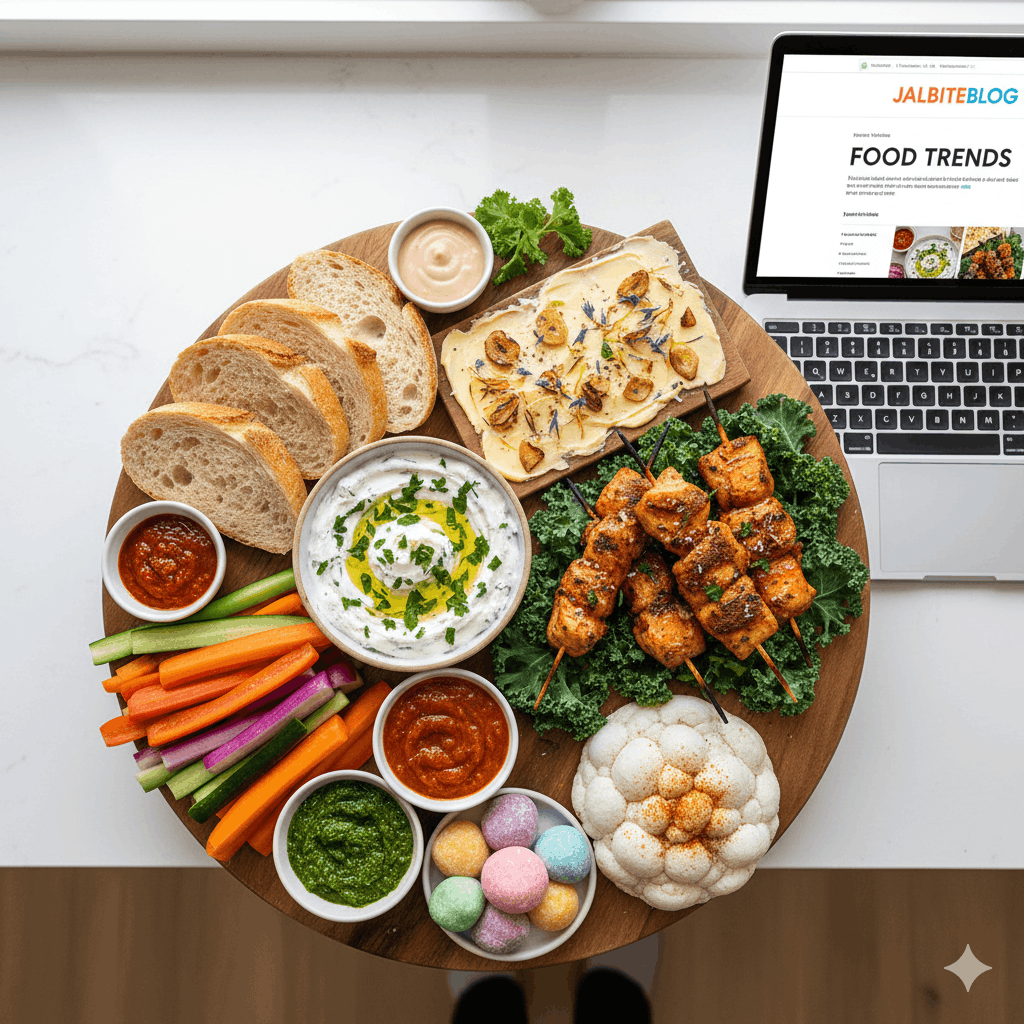
A sauce or dip
This is also where creative food presentation helps. Even a simple snack looks better when it has contrast and color.
Gourmet food trends made practical
Gourmet food trends can fit this niche if you translate them. Readers like restaurant ideas, but they do not want a restaurant workload.
How to write gourmet trends in a readable way
Explain the key element that makes the dish feel special:
A sauce with one standout ingredient
A finishing oil or spice
A texture contrast
A plating idea that is still realistic
A good food trends blog post does not try to imitate fine dining. It borrows one or two ideas and keeps the recipe home-friendly.
Global food trends and seasonal food trends
Global food trends spread quickly now because people see cuisines they never grew up with. Seasonal food trends also matter because ingredients change and cravings change.
Global food trends: what readers want
They want a simple introduction and a respectful approach. They want the “what it tastes like” explanation and a simplified method that still feels true to the original flavors.
Seasonal food trends: how to keep your content current
Seasonal food trends can be handled with a simple structure:
A spring section focused on bright flavors
A summer section focused on fresh produce
An autumn section focused on warm spice and roast flavors
A winter section focused on comfort and long-simmered dishes
This makes your trend page feel alive even without constant rewriting.
How to turn trends into recipes people actually cook
A common problem in trend content is that the idea looks good, yet the home version fails. The fix is not complicated. It’s about realistic instructions and small details.
Choose trends that fit real kitchens
A trend works better when:
Ingredients are easy to find
Prep is simple
The result tastes good even without perfect technique
The dish can be made in a small batch
That last point is where justalittlebite style content wins. Small portion recipes lower risk and build confidence.
Keep the “trend moment” but simplify the method
Every trend has a “moment” that makes it memorable. It might be a sauce, a topping, a shape, or a texture. Keep that moment and simplify everything else.
If the trend is known for crunch, focus on crunch.
If it’s known for a sauce, teach the sauce clearly.
If it’s known for a color or look, explain how to create that look with basic ingredients.
Storage and leftovers: the part many trend pages skip
Trend pages often forget leftovers. Readers notice. A trend recipe becomes repeatable when you explain:
How long it keeps in the fridge
Which parts should be stored separately
How to reheat without ruining texture
This is especially true for snack food trends, because snacks are often prepped ahead.
Writing Jalbiteblog food trends justalittlebite content that feels human
Readers can tell when a page is generic. The fix is not fancy language. It’s specificity.
Use a consistent tone
A food lifestyle blog tone that works here is simple and friendly:
Short paragraphs
Clear examples
Taste words that feel real
No over-selling
Add “real kitchen cues”
Instead of vague statements, use cues a real cook uses:
Color cues
Smell cues
Sound cues
Texture cues
A single cue can save a recipe. That is why trending food recipes do better when they include these details.
Build a repeatable post structure
A good structure for this niche looks like:
Short opening definition
Why the trend is popular
What it tastes like
Home version idea
Small portion option
Common mistakes
Storage
Wrap-up
FAQs
This structure supports food blogging trends without needing gimmicks.
Content angles that match the keyword set
This niche includes a long list of related keywords. The trick is to place them where they belong, not scatter them randomly.
Content angles that fit naturally
Food trends blog roundups: latest food trends, viral food trends, global food trends, seasonal food trends
Recipe pages: trending food recipes, quick bite recipes, small portion recipes
Culture pieces: popular food culture, contemporary cuisine trends, modern food ideas
Platform and creator angles: social media food trends, TikTok food trends, Instagram food ideas, online food influencers
Visual angles: food photography trends, creative food presentation
Category angles: gourmet food trends, street food trends, healthy food trends, plant-based food trends, fusion cuisine trends, dessert trends, snack food trends, unique food combinations
When these are grouped in the right sections, the page reads smoothly.
A practical mini guide for building your own trend list
Many readers want to know how trend lists are made. A calm explanation helps and also builds trust.
How to pick trends for a “latest food trends” list
Look for patterns, not one-off posts:
A flavor combo that repeats
An ingredient that shows up in many recipes
A method that people keep reusing
A format that fits busy schedules, like snack bowls or mini desserts
How to avoid “trend fatigue” in your content
Trend fatigue happens when every post feels the same. You can fix it by rotating the angle:
One week: snack food trends and quick bite recipes
Next week: dessert trends and small portion recipes
Next week: street food trends turned into home cooking trends
Next week: healthy food trends with comfort flavors
This keeps your food trends blog fresh without chasing every new fad.
Wrap-up
Jalbiteblog food trends justalittlebite fits a modern style of food content: fast to read, easy to try, and rooted in real cooking habits. The niche works when it balances inspiration with practical steps. Readers want latest food trends, yet they also want something they can cook without wasting time or ingredients. That’s why small portion recipes and quick bite recipes are such a good match for this keyword.
If you build your content around clear trend categories, explain taste and texture in plain words, and give realistic home versions, the page becomes useful beyond the moment. It stops being just another trend list and starts feeling like a reliable food discovery space.