
Hummus Recipe Without Tahini: Creamy Version With Pantry Swaps
If you’ve ever started making hummus and realized you’re out of tahini, you’re not alone. A good hummus recipe without tahini is still possible, and it can taste like the classic dip people expect, with the same lemon-garlic brightness and that creamy, spoonable texture.
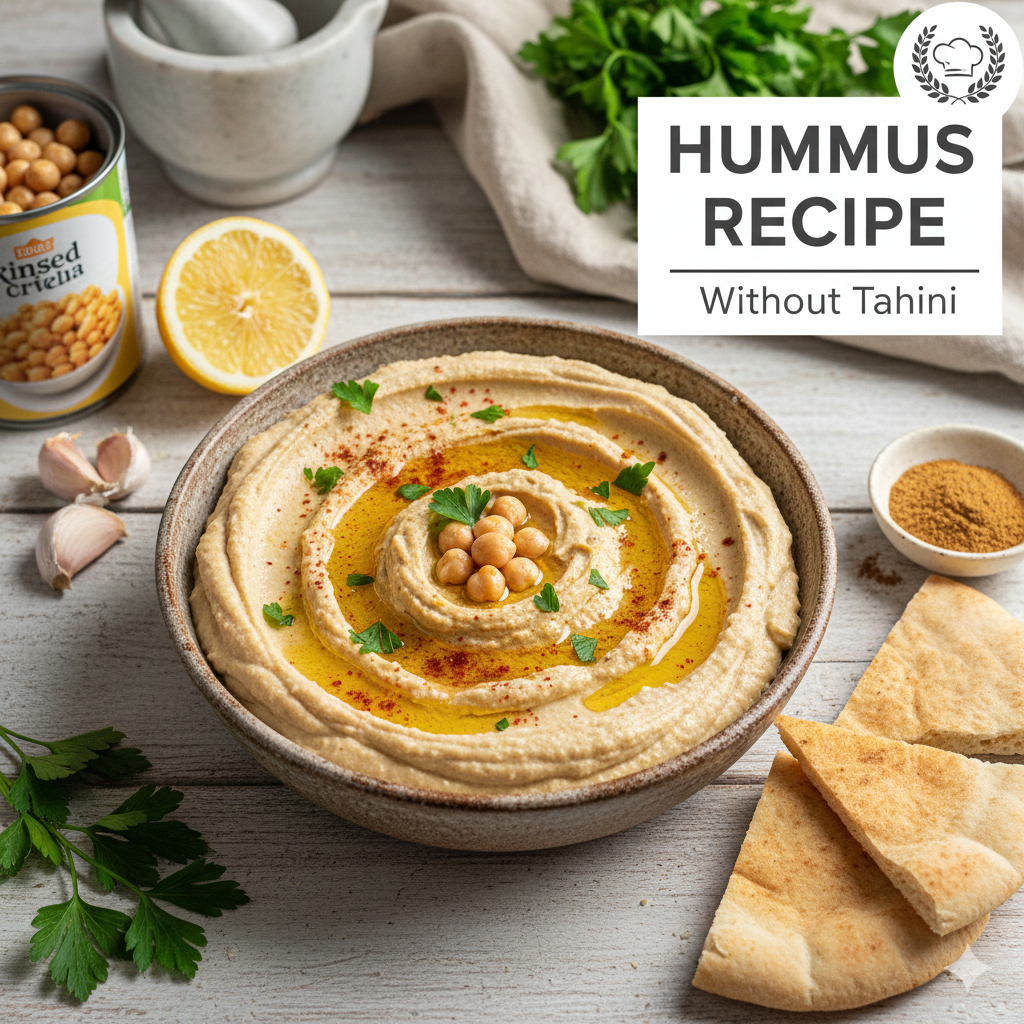
This guide covers hummus without tahini in a way that works for real kitchens: canned chickpeas, a blender or food processor, and a few pantry options that replace what tahini normally brings to the bowl. You’ll get a no tahini hummus recipe that’s quick, smooth, and easy to adjust, plus a full section on what to use instead of tahini in hummus when you want a sesame-free hummus recipe for allergy needs.
Why people make hummus without tahini
Tahini is a sesame paste. It adds nutty depth and a slightly bitter edge that balances lemon. It adds body too, which is why many dips feel “flat” when tahini is missing.
Still, plenty of people want tahini free hummus for simple reasons.
Some ran out of tahini. Some want healthy hummus without tahini that feels lighter. Some need hummus without sesame for allergy reasons. Some just don’t like tahini’s flavor. A homemade hummus no tahini approach solves all of that, and it can still land in the comfort zone of traditional hummus without tahini.
What tahini does in hummus, and what you need to replace
Before the swaps, it helps to name what tahini contributes.
Flavor
Tahini gives roasted sesame notes and a faint bitterness. Without it, lemon and garlic can feel sharper. A good substitute plan softens that edge and adds gentle nuttiness.
Texture
Tahini thickens and smooths the dip. Without it, chickpeas can blend grainy if the liquid and blending order are off.
Mouthfeel
Tahini adds a creamy “roundness” that sits on the tongue. Your swaps need to recreate that feel, not just thin the mixture.
Many classic hummus recipes use chickpeas, lemon juice, garlic, tahini, olive oil, and salt as the core set.
When you make chickpea hummus without tahini, you keep the core structure and swap the sesame element.
Hummus alternative to tahini: pantry swaps that work
People searching tahini substitute for hummus often want a single “best” answer. In practice, the best hummus recipe without tahini is usually a method: pick one swap for body, then use a technique that creates a creamy hummus without tahini.
Below are options that show up in popular no tahini chickpea dip recipes, plus what each one changes.
Olive oil + ice water (the smoothest “neutral” path)
This is the foundation for an oil based hummus without tahini. Olive oil adds richness. Cold water can help the dip blend lighter and fluffier.
Use this when you want olive oil hummus without tahini that still feels like a classic hummus no tahini bowl.
Aquafaba (the chickpea liquid)
Aquafaba is the liquid from canned chickpeas. It helps smooth hummus no tahini without watering down flavor.
Many no tahini hummus recipe versions reserve a little chickpea liquid for this reason.
Sunflower seed butter (sesame-free “nutty” flavor)
For hummus without sesame, sunflower seed butter is a practical hummus alternative to tahini. It gives a similar “seed” profile and helps texture.
Taste note: sunflower butter can lean slightly bitter on its own. Extra lemon can pull it back into balance.
Cashew butter (creamy and mild)
Cashew butter gives a silky, mellow base and works well in lemon hummus no tahini. It can make the dip feel rich even with less oil.
Plain yogurt (not vegan)
If you’re not aiming for vegan hummus without tahini, yogurt gives a creamy shortcut and softens garlic bite. This version is not dairy free hummus no tahini, so keep it as an optional variation.
A tiny touch of sesame oil (not sesame-free)
Some people use sesame oil as a flavor cue in authentic hummus no tahini, yet it does not work for sesame free hummus recipe needs. A few drops can be plenty for aroma, yet skip it fully if you need hummus without sesame.
The creamy method that makes hummus without tahini taste “right”
A great hummus recipe without tahini is less about one magic ingredient and more about how the mixture gets blended.
Three technique points matter most:
- Blend lemon juice and garlic first.
- Add chickpeas, then stream in liquid in small amounts.
- Add olive oil near the end for a smoother finish.
This style shows up in many quick hummus recipe without tahini approaches: chickpeas, water or chickpea liquid, olive oil, lemon, garlic, cumin, salt, processed until smooth.
Hummus Recipe Without Tahini (base recipe)
This is the simple hummus recipe no tahini that you can treat as your master bowl. It can become garlic hummus without tahini, lemon hummus no tahini, or a Mediterranean hummus no tahini variation with herbs.
Ingredients
This makes about 1 1/2 to 2 cups.
- 1 can chickpeas (garbanzo beans), drained and rinsed
- 3 tablespoons lemon juice, plus more to taste
- 1 small garlic clove (or 2 small cloves if you love garlic hummus without tahini)
- 1/2 teaspoon salt, plus more to taste
- 1/2 teaspoon ground cumin (optional, yet common in classic hummus no tahini)
- 3 to 5 tablespoons aquafaba or cold water (start small)
- 3 tablespoons olive oil, plus more for serving if you like olive oil hummus without tahini
- Optional: 2 to 3 tablespoons sunflower seed butter or cashew butter (pick one if you want extra body)
This base fits vegan hummus without tahini, dairy free hummus no tahini, and gluten free hummus without tahini by default.
Method
Step 1: Take the sharp edge off the garlic
If raw garlic tends to overpower your dip, do this quick step. Add lemon juice and garlic to the processor bowl. Let it sit for 5 minutes. This softens bite and helps the hummus taste more balanced.
Step 2: Blend the lemon-garlic base
Process lemon juice, garlic, salt, and cumin until the garlic is finely broken down.
Step 3: Add chickpeas and start blending
Add drained chickpeas. Process for 60 to 90 seconds. Pause and scrape the bowl.
Step 4: Stream in liquid for a smooth hummus no tahini texture
With the processor running, add 1 tablespoon aquafaba or cold water at a time. Stop when the mixture turns creamy and starts moving freely in the bowl.
Step 5: Add olive oil for a creamy finish
Pour olive oil in slowly with the machine running. Blend 60 seconds more. Scrape the bowl again, then blend once more.
Step 6: Taste and balance
Taste. Add a pinch more salt if needed. Add lemon juice if the dip feels flat. Add a spoon of water if it feels too thick.
This method produces creamy hummus without tahini that stays smooth after chilling.
Easy hummus without tahini: quick version for busy days
Some days you want a quick hummus recipe without tahini that takes five minutes and uses what’s already open in the fridge.
Use the same ingredients, skip the resting garlic step, and blend longer. Many “simple” versions are chickpeas, water, olive oil, lemon juice, garlic, cumin, and salt blended until creamy.
The biggest upgrade is extra blend time plus a little more liquid in tiny splashes.
This is the easiest path to homemade hummus no tahini that still tastes like classic hummus no tahini.
Traditional hummus without tahini: how to keep the flavor profile familiar
People search authentic hummus no tahini and traditional hummus without tahini when they want the taste to land close to the standard dip they know.
Two adjustments help:
Keep lemon present, not loud
Without tahini’s bitterness, lemon can dominate. Add lemon gradually, then stop when it tastes bright and rounded.
Use cumin lightly
Cumin brings “hummus” aroma even when tahini is missing. A small amount is enough.
Add salt earlier, then finish with a final pinch
Salt wakes up chickpeas. Add most at the start, then correct at the end.
Finish with olive oil on top
A drizzle can make olive oil hummus without tahini taste fuller at first bite.
Sesame free hummus recipe: replacing tahini without sesame
If your goal is hummus without sesame, skip tahini and skip sesame oil.
Pick one of these approaches:
Sunflower butter method
Add 2 tablespoons sunflower seed butter to the base recipe. Blend it into the lemon-garlic base before adding chickpeas. Add water in small splashes until creamy.
Cashew butter method
Add 2 tablespoons cashew butter. This gives a soft, mild sweetness that pairs well with lemon hummus no tahini.
Extra olive oil method
Skip nut and seed butters. Add 1 extra tablespoon olive oil and use aquafaba for body.
Each option works as tahini free hummus and keeps the dip friendly for sesame allergy households.
Creamy hummus without tahini: texture upgrades that actually work
If your hummus without tahini tastes good but feels grainy, the fix is usually texture, not seasoning.
Warm the chickpeas briefly
Warm chickpeas blend smoother than cold chickpeas. A quick rinse with hot water can help.
Blend longer than you think
Many people stop too early. Hummus gets smoother with time. Scrape the bowl and keep going.
Add liquid slowly
Too much water too fast makes the dip loose and dull. Small splashes keep flavor strong.
Use aquafaba for a silkier feel
Aquafaba adds body without flattening taste. It’s a common trick in homemade hummus no tahini recipes.
Add olive oil near the end
Oil can coat particles and help the final texture. This is one reason oil based hummus without tahini can still feel rich.
Garlic hummus without tahini: bold flavor without harshness
Garlic hummus without tahini can turn sharp if you go heavy on raw garlic. A simple trick helps: mix minced garlic into lemon juice and let it sit for 5 to 10 minutes, then blend. The lemon mellows the garlic.
If you want a stronger garlic punch without raw heat, roast a head of garlic and add 2 to 3 cloves of the roasted paste. This can make the best hummus recipe without tahini for people who love savory dips.
Lemon hummus no tahini: bright and clean
A lemon-forward hummus without tahini can be perfect for bowls, salads, and wraps.
To keep it balanced:
- use zest from half a lemon for aroma
- use juice gradually
- add a pinch more salt than you think you need
- finish with olive oil
The zest gives fragrance without extra acidity, which helps when tahini is absent.
Mediterranean hummus no tahini: herb and spice ideas
Mediterranean hummus no tahini can lean herb-heavy and fresh. Keep the base recipe, then blend in one of these:
- a handful of parsley for a green, clean taste
- roasted red pepper for sweetness and color
- smoked paprika for warmth
- chopped olives for a salty edge
These changes work well for homemade chickpea dip without tahini served at parties.
Healthy hummus without tahini: what “healthy” can mean here
Healthy hummus without tahini can mean different things for different kitchens. Many people mean lower cost, fewer ingredients, or a sesame-free approach. Some mean fewer calories.
Tahini is nutrient-dense. A tablespoon of tahini is often listed around the high double-digit calorie range.
Homemade hummus can vary a lot based on oil and portion size, yet common nutrition references put a 2-tablespoon serving in a range that can run from the 50s up into the 80s depending on recipe.
If you want a lighter bowl:
- reduce olive oil a little
- use aquafaba for texture
- keep lemon and garlic strong so the dip still feels satisfying
Vegan, dairy-free, gluten-free: quick diet checks
A lot of people search vegan hummus without tahini and dairy free hummus no tahini for meal prep, allergies, or personal preference.
Vegan hummus without tahini
The base recipe is vegan as written. Skip yogurt. Check your add-ins for hidden dairy.
Dairy free hummus no tahini
Same as vegan. Use olive oil, water, aquafaba, or seed butter.
Gluten free hummus without tahini
Hummus itself is gluten-free. The risk comes from what you scoop it with and cross-contact in shared kitchens.
Sesame free hummus recipe
Use sunflower butter, cashew butter, or extra olive oil. Skip sesame oil and tahini completely.
No tahini chickpea dip: serving ideas that don’t feel boring
No tahini chickpea dip can do more than sit next to chips.
As a spread
Use homemade hummus no tahini on sandwiches, wraps, and burgers. It replaces mayo nicely.
In bowls
Add a spoon to grain bowls, roasted veggies, or salads. Lemon hummus no tahini works especially well here.
With warm foods
Hummus is great under roasted vegetables. The heat loosens the dip and turns it saucy.
Party platter
Serve tahini free hummus with cucumbers, bell peppers, carrots, olives, and warm pita.
Storage and food safety: how long hummus lasts
This question comes up every time someone makes a big batch of hummus without tahini.
A common guideline for opened or homemade hummus is up to 7 days in the fridge.
Quality usually drops before safety does, so the best window for flavor can be shorter.
General leftover safety guidance often talks about 3–5 days for many refrigerated leftovers, depending on the food and storage habits.
Hummus can sit on either side of that range based on freshness of ingredients, clean utensils, and fridge temperature.
Storage tips that help
- store in a clean, airtight container
- press plastic wrap onto the surface if you want less drying
- drizzle a thin layer of olive oil on top
- use a clean spoon each time
If it smells sour, looks watery in a strange way, or shows mold, discard it.
Common problems and fixes for hummus without tahini
My hummus is grainy
Graininess usually means the chickpeas didn’t break down enough or there wasn’t enough liquid during blending.
Fix:
Blend longer, scrape the bowl more than once, add a small splash of aquafaba, then blend again.
My hummus tastes too sharp
Without tahini, lemon and garlic can stand out.
Fix:
Add a few more chickpeas, a touch more olive oil, and a pinch more salt. If you use cashew butter, a spoon can soften the edge.
My hummus is too thick
Fix:
Add water or aquafaba in tiny splashes until it loosens.
My hummus is too thin
Fix:
Add more chickpeas. Blend longer. Chill for 30 minutes and re-check texture.
My hummus tastes flat
Fix:
Add salt first. Then lemon. Then a pinch of cumin if you like traditional hummus without tahini flavors.
Conclusion
A hummus recipe without tahini can still be creamy, smooth, and full of that familiar lemon-garlic flavor. The best results come from a simple plan: build the lemon and garlic base first, blend chickpeas longer than you think, add liquid in small splashes, then finish with olive oil for a rich texture. If you need hummus without sesame, sunflower butter or cashew butter can recreate the body tahini normally gives, without sesame exposure. With the right method, hummus without tahini becomes a reliable pantry staple, not a backup plan.